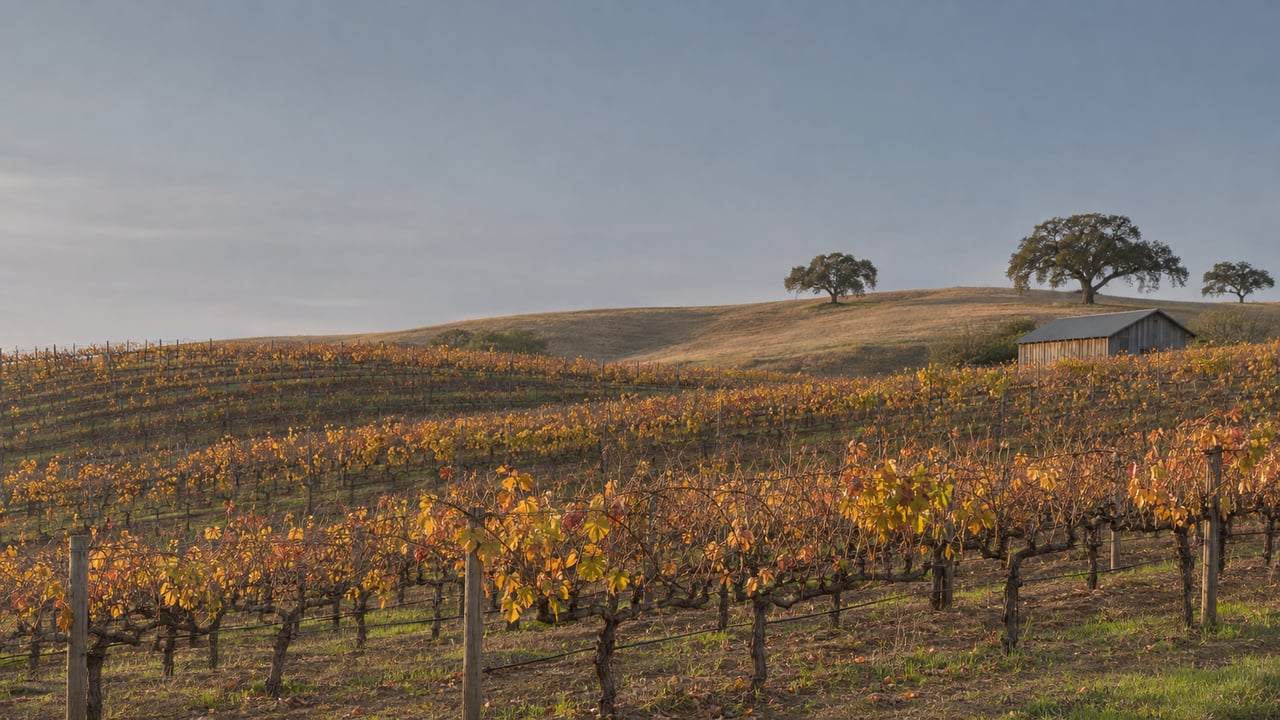
Calmére, Artesa and the New Buyers in Napa's Carneros
November 19, 2026
November 19, 2026
"We plan on buying more," broker Tony Chan told the San Francisco Chronicle in October 2025. His client had just paid $16.8 million in cash for Calmére Estate Winery at 2750 Las Amigas Road, the former Acacia property at the bay end of Napa's Carneros. The same buyer had paid $24 million for the 307-acre Alta Vista Ranch in Carneros the year before, also in cash.
Eleven months later, Jean-Charles Boisset bought Artesa Winery from Spain's Raventós Codorníu. Neither seller was a Carneros family, and neither buyer gave Cabernet as the reason for buying. Both transfers on the Napa side of Carneros went the same way. Owners whose main business sits in another region let a cool-climate estate go, and buyers with a specific use for the winery building picked it up. Anyone pricing a Carneros property this winter should start from that buyer pool. Comparing it with the Cabernet valley to the north gives the wrong number.
The Peju family has made wine in Rutherford since 1983 and still runs Peju Winery there. They bought the Carneros parcel in 2016 to build a separate brand. They renovated the winery and tasting room, replanted all 75 acres, and moved much of their production south. CEO Ariana Peju told the Chronicle that Peju is, at its heart, a Bordeaux house specializing in Cabernet Sauvignon. Calmére's Pinot Noir and Chardonnay came to feel like too much of a departure, and the family chose to concentrate on direct-to-consumer sales in the Rutherford tasting room.
Raventós Codorníu described its exit in nearly the same terms. Its announcement of the Artesa sale, dated September 23, 2026, calls the transaction part of "a strategic portfolio review aimed at focusing investment and resources on the company's priority regions." The same release calls Artesa one of the most successful wineries in the group's portfolio. The estate was performing well. It sat outside the regions where its owner now wants to put its capital.
Neither seller was under pressure from the land. Each was sorting its holdings, and Carneros was the region left over.
Here are the two properties side by side, using what each party made public.
| Calmére Estate Winery | Artesa | |
|---|---|---|
| Seller | Peju family | Raventós Codorníu |
| Buyer | Overseas buyer represented by Tony Chan | Boisset Collection |
| Closed or announced | Closed October 8, 2025 | Announced September 23, 2026 |
| Property | 100 acres, about 75 planted, 40,000-square-foot winery | 350 acres, 155 acres of vineyard in Carneros and Mount Veeder |
| Price | $16.8 million, all cash | Not disclosed |
| Buyer's stated plan | Custom crush first, then a new brand | Sparkling wine and an art and culture destination |
Calmére's 40,000-square-foot winery sits on the site where Acacia, founded in 1979, helped establish Carneros as a region for Pinot Noir and Chardonnay. The new owner told the Chronicle it would first run Calmére as a custom-crush facility, making wine for other producers. The buyer already made about 300,000 bottles from Alta Vista Ranch fruit for distribution in China and Southeast Asia and plans to launch its own brand later. Chan described his client's case for land in macro terms: the client believes the "U.S. dollar may depreciate in value, so holding agricultural land in Napa should be a good asset class to hedge inflation." At $16.8 million for 100 acres, the price works out to $168,000 per total acre. That price covers an operating winery as well as vines, so it does not stand in for the value of Carneros vineyard land.
Artesa started out as sparkling wine. It was founded in 1991 as Codorníu Napa, "conceived with the ambition of producing great sparkling wines in California," according to the seller's release. Boisset already owns Raymond Vineyards, Elizabeth Spencer Winery and the Oakville Grocery in Napa Valley and Buena Vista and DeLoach in Sonoma County. Artesa is his first winery in Carneros. He told the Chronicle that he courted Raventós Codorníu for 13 years and that this was not "a distress sale." The renamed Artesa Estate now pours the existing Artesa wines alongside sparkling wines from his JCB Collection. The building is the one Barcelona architect Domingo Triay set into a hillside under native grass, with views across vineyards to San Pablo Bay.
Chan's client plans to fill a large production building with other producers' wine for now, while Boisset is adding his own sparkling wine and visitors to an estate that was built for sparkling in the first place. In both cases the winery building and its fruit drove the purchase.
The grape market supports what the buyers did. Turrentine Brokerage's March 2026 market update describes a bulk market defined by "elevated inventories and highly selective buyer behavior." In its list of what buyers wanted that month, 2025 Carneros Chardonnay was on the "needed" side. On the "available" side were 2024 and 2025 Napa Valley Cabernet Sauvignon, 2025 Sonoma County Chardonnay and 2024 and 2025 Sonoma County Pinot Noir. Carneros Chardonnay had buyers looking for it. Napa Cabernet and Chardonnay from just over the county line were still waiting for buyers.
That does not make 2026 an easy year for Carneros growers. Obsidian Wine Co. farms about 83 acres in Carneros, and co-owner Peter Molnar told the Press Democrat in July that wineries were still slow to commit to fruit: "The safest thing to do is to say 'no,' and I think we're a little bit on that cycle." In the same report, Turrentine broker Christian Klier said he had seen "an uptick" in grape pricing as a lighter crop eased several years of oversupply. He added that some wineries were offering stronger contracts so growers would farm through harvest.
The useful point for a buyer is that cool-climate white fruit from this appellation sits in a different part of the market from the Cabernet that sets most Napa vineyard prices. We made the Cabernet case in our recent post on what an Oakville vineyard is worth when Napa Cabernet is cheap to buy. Carneros does not follow that pattern.
The 2026 harvest reinforced the cool-climate story. Domaine Carneros, celebrating its 40th harvest, reported its earliest-ever start, with fruit arriving July 27. Sparkling-base and white grapes came in quickly, while still-wine Pinot Noir ripened more slowly. At Etude, senior winemaker Jon Priest wrote that 2026 brought his first July harvest and that the fruit ripened evenly. Santé's October roundup reported that Carneros growers were nearly done by early September, with a light crop and positive reports on quality. Christopher Hyde of Hyde Vineyards told the Napa Valley Register that Carneros red varieties yielded somewhat better than the earlier Chardonnay and Pinot Noir.
A short, early, high-quality crop of sparkling base and Chardonnay is the kind of vintage that suits the buyers who have been active here. A sparkling house or a custom-crush operation needs dependable cool-climate fruit and a winery close to it, and Carneros has both at the south end of the valley.
For a Carneros owner, these deals change who is likely to bid. A buyer who compares a Carneros estate with Cabernet land up valley will price it on Cabernet terms and come in low. The bidders who have actually shown up in the past fourteen months valued other things: production capacity, room for visitors, a building that already has a reputation, and land held as a long-term asset. Chan said his client was "actively talking to different winery and vineyard owners" and had looked at a 700-acre prospect. Boisset waited 13 years for one property. Both kinds of buyer are patient and selective, and both are prepared to pay for what they want.
How Calmére was sold is also relevant. Ariana Peju told the Chronicle that in a stronger market she might have shopped the winery privately. She chose a public listing because "the usual ways of bringing things to market I don't think would have worked in my favor," and the family drew "a couple people interested." When the buyer pool is that small, the work is in reaching the right two or three parties: sparkling producers, custom-crush operators and long-horizon landholders, some of them abroad. A wider audience of Cabernet buyers adds little. For a buyer, the same facts mean a Carneros estate should be underwritten on what its winery and its fruit can do in their own business plan. A per-acre comparison with Rutherford or Oakville will mislead. Our Sonoma Valley post on winery sites that outlast their brands follows a related pattern on the other side of the county line, and our Napa neighborhood page covers the south end of the valley more broadly.
If you own a Carneros winery or vineyard and want to know which buyers would bid on it, or you are weighing a cool-climate estate against Cabernet ground up valley, Wine Country Consultants can talk it through with you in confidence. Schedule a confidential consultation.
We are a family real estate firm focused on legacy vineyards and wineries. Our unique approach to buying and selling properties highlights a deep understanding of the historical importance every property holds as well as its potential in today’s market. Contact us today to find out how we can be of assistance to you!