The Napa Address That's Actually Two Different Markets
September 3, 2026
September 3, 2026
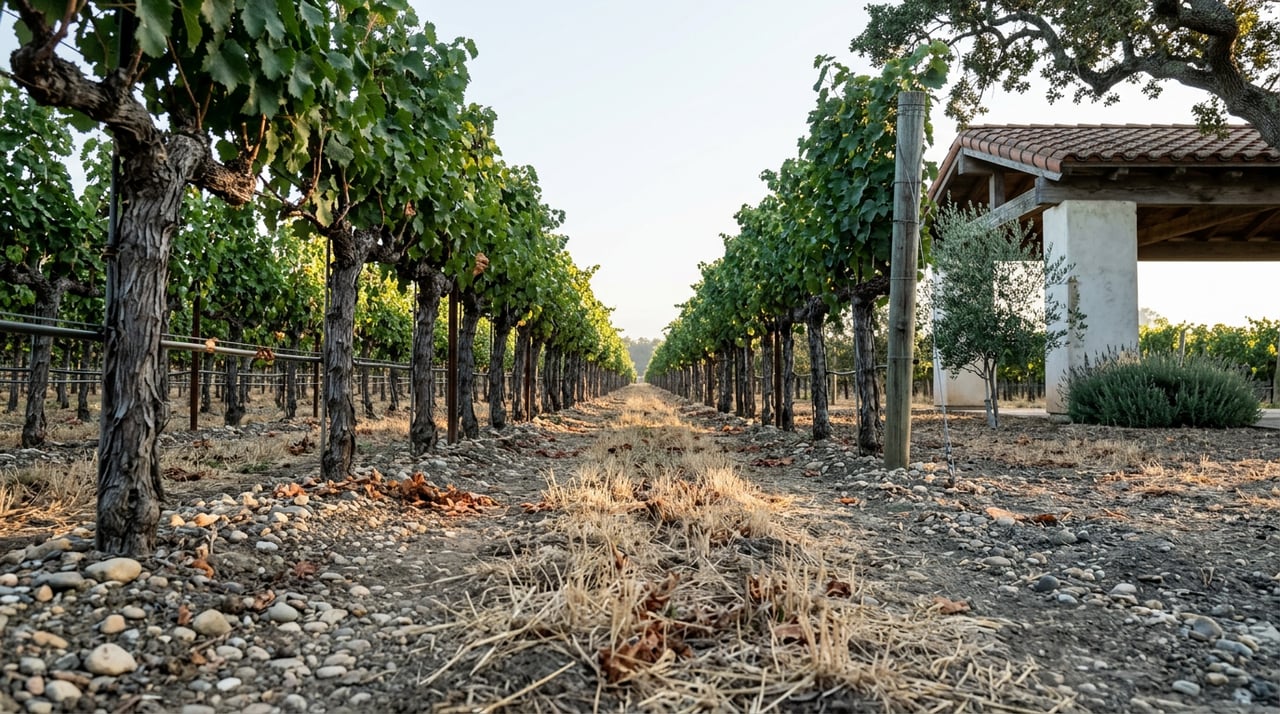
Picture two five-acre parcels, both listed as "Rutherford," both inside the same 94573 zip code, both a five-minute drive from the Rutherford Grill. One trades near the top of Napa's per-acre range. The other, despite sharing an appellation name, a school district, and a mailing address, sells for a fraction of that. Nothing in the zoning code explains the gap. No ordinance draws a line between them. The difference lives in a phrase real estate listings use constantly and county planners have never once defined: the Rutherford Bench.
That gap is the story. Buyers who treat "Rutherford" as a single, legible asset class are pricing off a name that quietly refers to two different things at once, and in a year when Napa's underlying vineyard economy is visibly cooling, the difference between those two things matters more than it has in over a decade.
The Rutherford AVA is a real, federally recognized boundary. It was established on July 2, 1993, and covers roughly 6,650 acres on the Napa Valley floor between St. Helena and Oakville. That much is settled law, filed with the Bureau of Alcohol, Tobacco and Firearms and unchanged since.
The "Rutherford Bench," the phrase that actually drives the premium pricing, is something else entirely. According to Wine-Searcher's regional profile, the term is not a legal designation at all. It refers informally to vineyards on the west side of Highway 29, roughly a three-mile stretch running from Oakville up toward Rutherford, where an ancient alluvial fan off the Mayacamas Mountains left behind the gravelly, well-drained soil that gives the appellation its signature dusty tannin structure. There is no assessor's map that shades in the Bench. There is no county file you can pull that certifies a parcel sits on it. It's a convention, repeated by growers, critics, and wineries for decades, that has never needed to be codified because everyone in the trade already agreed on what it meant.
That works fine until a buyer from outside the trade is staring at two listings that both say "Rutherford" in the headline.
The other detail that gets lost in the appellation's reputation: most of Rutherford isn't vineyard. Of the AVA's roughly 6,650 total acres, only a fraction, commonly cited around 1,700 acres, is actually planted to vine. The rest is homesites, oak woodland, roads, creek setbacks, and land that is agriculturally zoned but not under vine at all.
That distinction matters for underwriting, not just trivia. A parcel can carry the Rutherford name on title, in marketing copy, and in casual conversation without ever having produced a ton of fruit. Buying "in Rutherford" and buying "a Rutherford vineyard" are not interchangeable claims, and the appellation's fame does the least work explaining the difference between them.
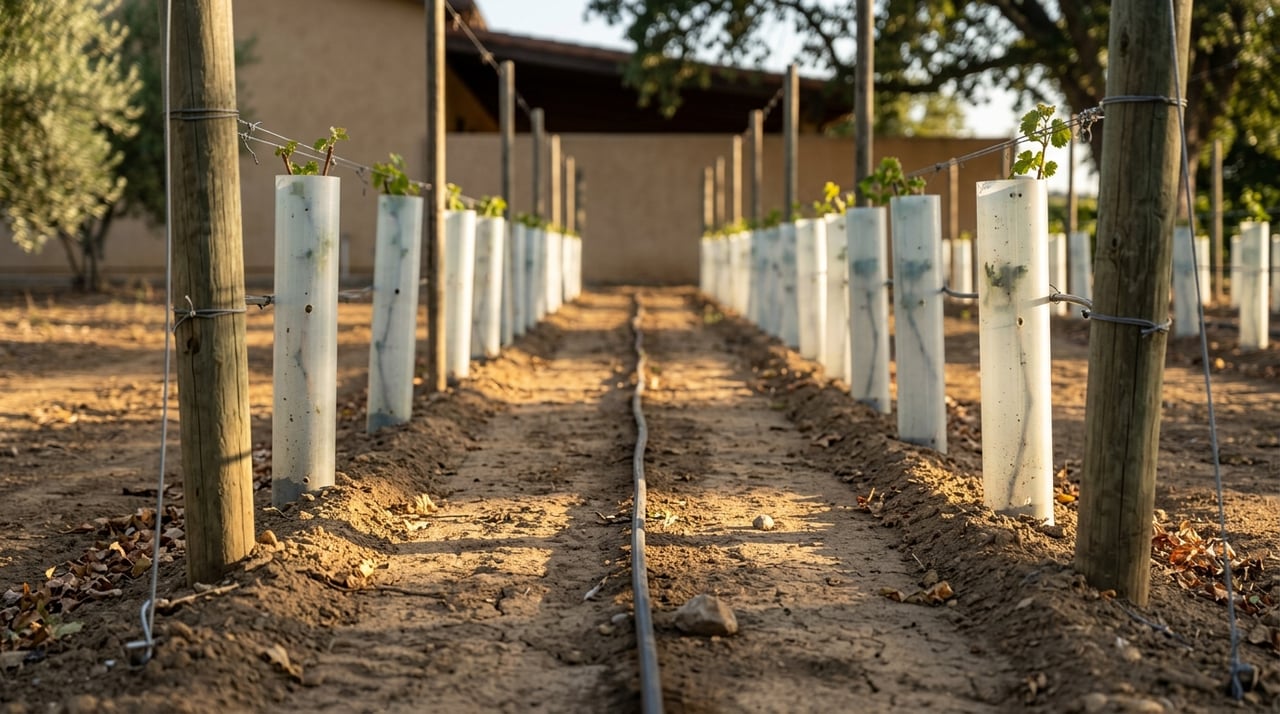
Napa's own valuation framework backs this up. The Napa County Assessor's office breaks vineyard value into three components: the land itself, the non-living improvements like trellising and irrigation, and the vines. Appraisers compare sales of planted versus unplanted acreage specifically because the difference in what those two categories of land are worth can be substantial. An unplanted 5-acre "Rutherford" parcel and a producing 5-acre block on the Bench are not the same instrument, even when a listing sheet treats them that way.
The reputation the Bench trades on didn't arrive by accident. Beaulieu Vineyard was founded there in 1900 by Georges de Latour, who kept the estate alive through Prohibition by securing a sacramental wine warrant, and whose 1936 Cabernet won gold at the 1939 Golden Gate International Exposition. Inglenook was established in 1879 by Gustave Niebaum a few years earlier, and the phrase "Rutherford Dust" itself is credited to winemaker André Tchelistcheff, who coined it after tasting that same 1936 Beaulieu Cabernet.
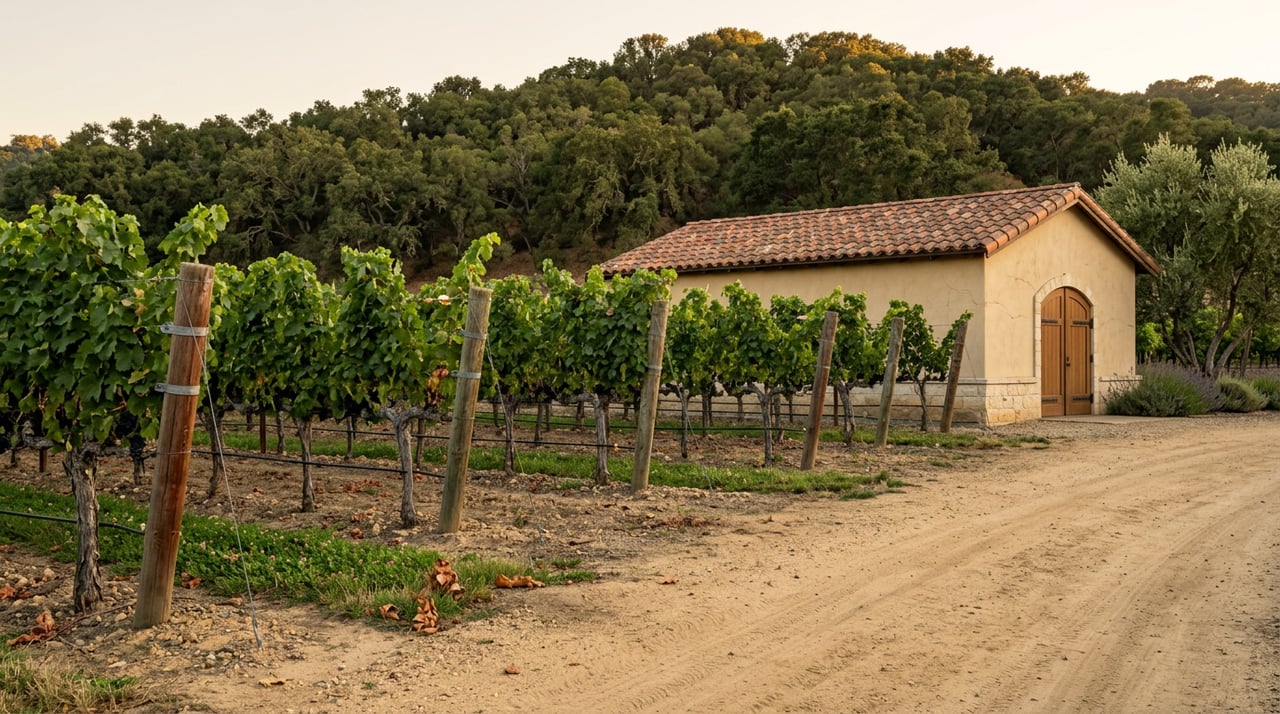
Today's Bench holdings carry that same lineage forward at smaller scale. Long Meadow Ranch farms a 74-acre benchland estate planted to Sauvignon Blanc, Cabernet Sauvignon, and Merlot. Greer Vineyard, at just three acres, sits deep in the heart of the Bench and produces Cabernet exclusively from estate fruit, according to the Rutherford Dust Society's membership directory, the growers' and vintners' association that has represented the appellation since 1994. Portions of the Beckstoffer Georges III vineyard, one of the most cited names in Rutherford Cabernet, were first planted in 1895 by Thomas Rutherford himself.
History exists on the other side of the highway too, just without the same price tag attached. Martin Estate's stone château has stood on the appellation's eastern benchland, toward the Vaca Mountains rather than the Mayacamas, for more than 130 years, and its 12 acres carry a genuine Rutherford pedigree. What that address doesn't carry is the alluvial-fan soil story that built the west-side Bench's reputation, which is exactly the kind of distinction a listing headline was never built to make.
There's a second wrinkle that compounds the Bench effect, and it isn't unique to Rutherford, though Rutherford is a clean example of it. A 2025 study published in the Wine Business Journal by Santos, Reynoso, Wong, and Richman set out to explain why the appraised land value of small Napa vineyards, those between one and ten acres, runs disproportionately higher per acre than larger holdings. The authors point to two competing forces: strong demand from lifestyle buyers who want a vineyard attached to an estate rather than a commercial farming operation, and the economies of scale that let larger operations spread costs across more acreage, pulling per-acre value back down as size increases.
Put those two effects together and a buyer evaluating a small Bench parcel is stacking two separate premiums on top of each other, appellation scarcity and small-lot scarcity, neither of which shows up as a distinct line item on a comparable sales sheet.
None of this means Rutherford land is exempt from the broader Napa correction underway right now. Napa County's 2025 Agricultural Crop Report, released in late July 2026, showed the county's total farm production value, driven almost entirely by winegrapes, falling to roughly $969 million, down from $1.03 billion the year before, a decline of about 6%, on producing vineyard acreage that dropped 6.6%, from roughly 45,967 acres in 2024 to 42,937 in 2025. Coverage of the report noted piles of pulled trellis and vines along Highway 29 south of St. Helena, visible evidence of vineyard acreage coming out rather than going in.
That softness shows up in the county's books too. Napa County Assessor-Recorder John Tuteur delivered the 2026-27 assessment roll at $59.3 billion, an increase of just 3.12% over the prior year, the smallest percentage gain since 2012, when the county was still climbing out of the last recession. Tuteur's office lowered the assessed value of 97 vineyard, winery, and hospitality parcels for a combined reduction of $301 million, citing headwinds across the winegrape and real estate industries directly.
That context reframes the Bench premium rather than erasing it. Appellation prestige has always been a proxy for expected income, and in a year when county-wide grape values and producing acreage are both retreating, a buyer who leans purely on the Rutherford name to justify a purchase price is leaning on a proxy at exactly the moment the underlying signal has gotten noisier. Income and comparable sales evidence carry more of the argument now than they did two or three years ago.
A few questions worth asking before treating any "Rutherford" listing as a like-for-like comparable:
Rutherford still farms in real time. Whitehall Lane Winery's viticulture team has been planting Oakville bluegrass as a cover crop across its Rutherford acreage to discourage the three-cornered alfalfa hopper, a pest tied to grapevine disease spread. That kind of ongoing agricultural management, and its cost, is part of what a buyer inherits along with the name on the title.
Is "Rutherford Bench" a term I can rely on in a legal description or title report? No. It will not appear as a boundary on any county map or assessor parcel description. It is a market and viticultural convention, not a zoning designation, so any claim about a parcel's Bench location should be verified against soil surveys, elevation, and side-of-highway location rather than assumed from marketing language alone.
Does the whole Rutherford AVA carry the same price premium? Available market commentary suggests otherwise. One mid-2025 industry write-up placed Rutherford appellation vineyard land well above $300,000 an acre, compared with roughly $80,000 an acre in Sonoma's Carneros region, while active vineyard listings across all of Napa County recently averaged closer to $97,000 an acre. That spread signals how much of Rutherford's reputation is concentrated in a specific strip of the appellation rather than distributed evenly across all 6,650 acres.
Should current softening in Napa's crop values change how I think about a Rutherford purchase? It should change how much weight you put on appellation name alone. With county winegrape value down and the 2026-27 assessment roll showing its slowest growth since 2012, income history and comparable sales now carry more of the underwriting case than reputation does on its own.
Rutherford rewards buyers who ask harder questions than the appellation name invites. If you're evaluating a legacy vineyard, an operating winery, or raw acreage anywhere in this pocket of Napa Valley, Wine Country Consultants has spent three decades sorting exactly this kind of distinction for operating vintners, legacy owners, and investors. Schedule a confidential consultation before you price a parcel off its name alone.
We are a family real estate firm focused on legacy vineyards and wineries. Our unique approach to buying and selling properties highlights a deep understanding of the historical importance every property holds as well as its potential in today’s market. Contact us today to find out how we can be of assistance to you!