Planning An Oakville Vineyard Replant For Long-Term Estate Value
July 16, 2026
July 16, 2026
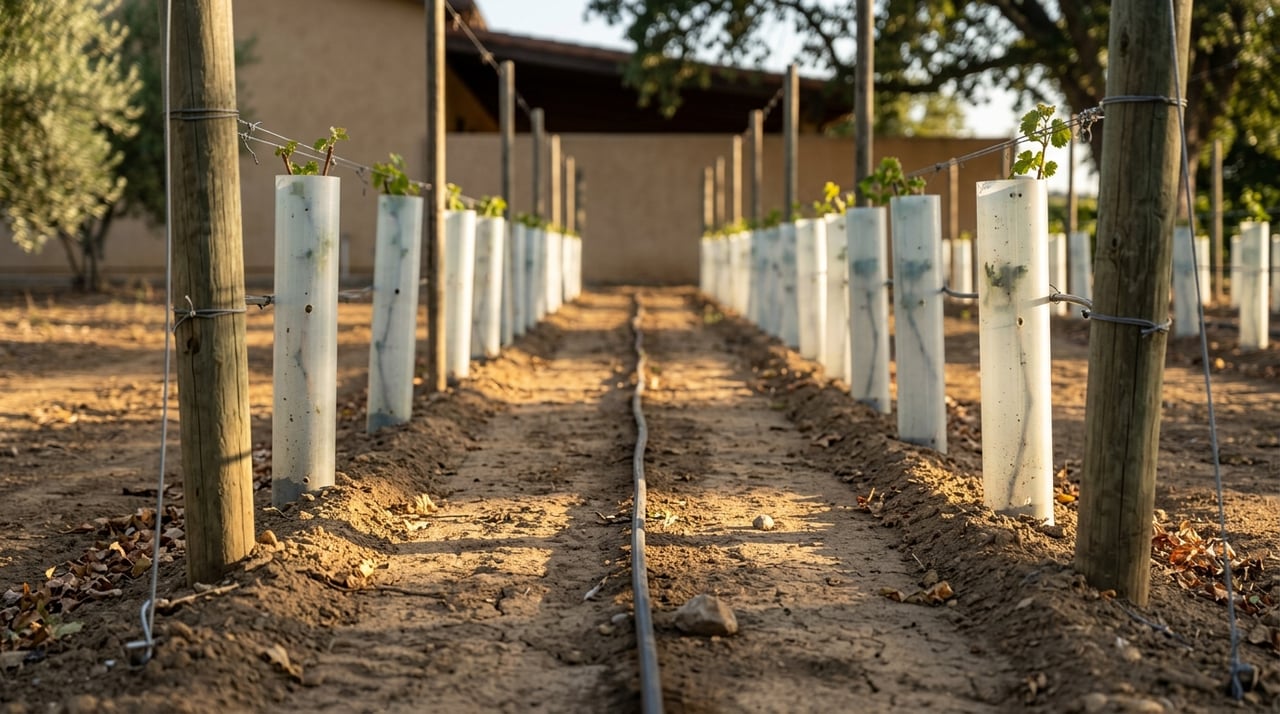
A vineyard replant can protect an Oakville estate’s future, or quietly weaken its near-term value. If you own, evaluate, or plan to acquire vineyard property in this part of Napa Valley, the replant decision is rarely just about old vines. It affects production timing, regulatory planning, infrastructure, and how the asset may be viewed by buyers and appraisers. Let’s dive in.
Oakville is not a generic vineyard location. The Oakville AVA is defined by valley-floor conditions, meaningful topoclimate variation, a long cool growing season, and soils tied to alluvial fan sediments, floodplain deposits, terraces, and the lowland-to-upland break near the 500-foot contour.
That setting helps explain why Oakville is so closely tied to Cabernet Sauvignon and other Bordeaux varieties. UC Davis Foundation Plant Services notes that Cabernet Sauvignon 02 is known as the Oakville selection from UC’s Oakville Experiment Station, and Oakville is widely regarded as one of California’s leading AVAs for quality red Bordeaux varieties.
In practical terms, a replant in Oakville becomes part of the estate story. You are not simply replacing declining vines. You are making long-range choices about how the property will perform, how it will be understood in the market, and how well it fits Oakville’s established identity.
Napa County’s 2024 winegrape production data adds important context. The county reported $1.031 billion in winegrape production value, with Cabernet Sauvignon leading both acreage and value among major varieties. That does not mean every block should follow a single formula, but it does show why productive, recognized vineyard infrastructure still matters financially.
Before choosing rootstock, clone, or spacing, it helps to define what success looks like for the property. A replant plan for a long-held family estate may differ from one designed to support a future sale, estate branding, custom-crush supply, or a broader operational transition.
UC guidance is clear that there is no perfect clone. Suitability depends on your target wine market, desired style, and local conditions. In other words, the best replant choice is usually the one that fits the site and the estate’s operating model, not the one that sounds most fashionable.
That is especially important in Oakville, where buyers often look past acreage alone. They may focus on whether the vineyard feels coherent, productive, and easy to integrate into a working estate. Clear planning helps the property read as intentional rather than transitional.
In Napa Valley, rootstock choice is not a technical side note. UC IPM states that grape phylloxera remains a practical risk, especially in heavy clay soils found in cooler grape-growing regions such as Napa County, and resistant rootstocks are the only completely effective control in severely affected areas.
UC Davis research also treats rootstocks as an important tool for water-stress management. As drought tolerance continues to matter, rootstock selection can influence not only vine survival but also how durable the vineyard may be over time.
For estate value, that matters because buyers and lenders often respond well to vineyard systems that appear current, well-planned, and resilient. A replant that ignores known site risks may raise more questions than confidence.
UC Davis Foundation Plant Services explains that registered vines are disease-tested under state regulation and used to create certified stock. Certified stock helps reduce uncertainty about vine performance, which is a meaningful advantage when you are making a long-term capital decision.
That does not guarantee identical outcomes across every site. It does mean your planting material starts from a more documented and dependable place, which supports better planning and cleaner due diligence.
For an Oakville estate, documented planting decisions can also help future buyers understand what was done and why. That level of clarity often strengthens confidence during underwriting and valuation review.
Clonal differences can affect leaf form, berry color, disease resistance, ripening date, yield, and wine style. At the same time, UC sources emphasize that annual cultural practices and management often shape final wine quality more than clone alone.
That is a useful reminder if you are weighing replant options with long-term value in mind. A clone should support the site and the business plan, but it should not be treated as a shortcut to quality.
For example, a block intended for high-end Cabernet production may call for a different selection strategy than one supporting broader estate branding or mixed grape supply. The key is internal alignment between the vineyard design and the role that block is meant to play.
UC guidance for grapes notes that rows are commonly spaced 6 to 12 feet apart and vines 4 to 8 feet apart. Deeper, richer soils generally need more room, while drainage, vigor, equipment needs, and canopy goals should all influence the final design.
That is why spacing should be a site decision, not a trend decision. In Oakville, where block performance and estate presentation both matter, the wrong spacing can create long-term inefficiencies that are expensive to unwind.
UC also notes that grapes need excellent drainage, and that high wine quality often comes from less fertile, rocky soils because smaller berries increase the skin-to-juice ratio. Those site realities should inform how each block is planted and managed.
UC ANR recommends arranging vineyard blocks around uniform soil and slope factors, orienting rows to avoid erosion hazards, and using cover crops, roads, and drainage features to reduce runoff. On steeper ground, contour-aligned rows may reduce erosion, though they can complicate mechanization.
That matters because block layout influences more than day-to-day operations. It affects maintenance access, winterization planning, long-term flexibility, and how coordinated the estate feels as a whole.
When a vineyard is well laid out, the property often presents as a more finished agricultural asset. When block design looks pieced together, that can create operational friction and muddy the estate’s value story.
For Oakville replanting, local regulations are not a side issue. Napa County code states that vineyard replanting on slopes over five percent cannot begin until an approved vineyard replanting program, or if necessary an erosion control plan, has been submitted and approved.
The county also states that site development should occur in workable phases. In addition, grading or earthmoving on slopes greater than five percent is generally limited to the April 1 through October 15 season unless winter-shutdown work is approved and properly winterized.
This can directly affect scheduling, carrying costs, and how long a block stays offline. If a replant plan is not matched to the county’s process, even a strong viticultural concept can lose momentum.
County documentation for erosion control plans requires site-specific details such as stream locations, soil types, erosion-prone areas, proposed erosion control measures, and documented site visits by the preparer. In plain English, the paperwork and technical review are part of the project, not an afterthought.
A phased replant strategy can help preserve some producing acreage while another block is being redeveloped. That usually supports continuity in operations and helps the estate avoid reading like a property stuck mid-transition.
It can also preserve visual order and reduce the shock of a full production reset. For owners thinking about refinancing, succession planning, or future sale timing, that continuity can matter.
Napa County’s phased-development framework supports the practical logic behind this approach. While each property is different, coordinated phasing often gives you more flexibility than a one-time, all-at-once reset.
Napa County’s Assessor explains that vineyard value includes land, non-living improvements such as stakes, trellises, irrigation, and frost protection, plus the vines themselves. The county also notes that the cost approach is especially useful for developing vineyards, while mature vineyards are often better understood through the income approach when production data exist.
That distinction matters if you are weighing replant timing. A mature block with reliable production data may support a different value conversation than a young planting that is still ramping up.
The county further notes that most Napa Valley vines have a life of 25 to 30 years. It also states that the first three years after planting are exempt from taxation because the vines are not yet in full production, and when a block is replanted, the prior base-year value of the vines and non-living improvements is removed from the roll.
In simple terms, young replants tend to be viewed more as deferred-income assets, while mature producing blocks are easier to analyze as current income-generating assets. That does not make young vines undesirable. It means their value is often more prospective than immediate.
A recent Napa Valley valuation study in Wine Business Journal found that smaller vineyard parcels had higher appraised land value per acre and argued that lifestyle-investor demand may help explain that premium. The same study said a positive grow value signals mature vines and described that as attractive to lifestyle investors.
For you as an owner or buyer, the takeaway is straightforward. Mature, healthy vines can be a market advantage, but a well-executed replant still adds value when the plan is clear, the infrastructure is clean, and the transition is well documented.
If long-term estate value is the goal, a replant plan should usually communicate several things clearly:
In Oakville, these details do more than improve operations. They help preserve the estate’s narrative, utility, and market credibility.
If you are evaluating when to replant, how to phase a project, or how a replant may affect future sale timing, it helps to look at the vineyard as both an agricultural system and a real asset. For discreet guidance on legacy vineyards, operational wineries, and high-value agricultural estates, connect with Wine Country Consultants.



We are a family real estate firm focused on legacy vineyards and wineries. Our unique approach to buying and selling properties highlights a deep understanding of the historical importance every property holds as well as its potential in today’s market. Contact us today to find out how we can be of assistance to you!