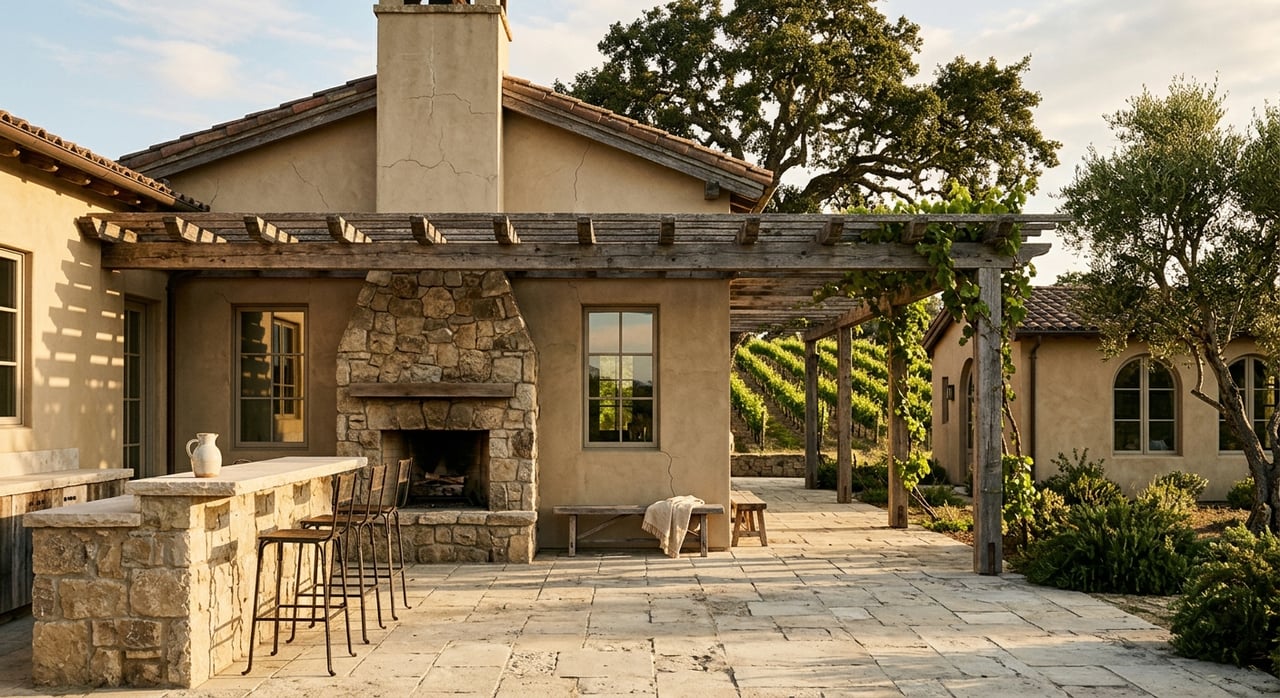
How to Evaluate Sonoma Vineyard Hospitality Potential
July 9, 2026
July 9, 2026
If you are looking at a Sonoma vineyard estate and wondering whether it could support a small hospitality concept, the answer is rarely a simple yes or no. In Sonoma, the details matter: city versus county jurisdiction, zoning, agricultural status, site capacity, and how closely your idea stays tied to the land. Understanding those moving parts early can help you avoid expensive surprises and focus on properties with real potential. Let’s dive in.
In Sonoma, vineyard estates fall into two different regulatory tracks. Properties inside the City of Sonoma follow city zoning and city enforcement, while many vineyard estates outside city limits are governed by Sonoma County, Permit Sonoma, county health rules, and alcohol licensing requirements.
That split matters because the same hospitality idea may be treated very differently depending on where the parcel sits. A buyer who assumes a vineyard address automatically allows guest use, tastings, or short-term lodging can lose time and money if the property is in the wrong jurisdiction or subject to added restrictions.
Before you evaluate design ideas or revenue potential, confirm whether the property is in the City of Sonoma or unincorporated Sonoma County. Then verify the parcel’s base zoning, any combining districts, and whether the land is under a Williamson Act contract.
In unincorporated Sonoma County, use permits are public-hearing entitlements issued by the Board of Zoning Adjustments or Planning Commission. County code also states that zoning and building permits that conflict with the general plan may not be issued, which makes early parcel analysis essential.
For many buyers, this is the point where due diligence becomes more than a checklist. It becomes a screening tool that helps you separate a beautiful estate from a workable hospitality asset.
For vineyard properties in Sonoma County’s LEA agricultural district, tasting rooms and related sales or promotion of agricultural products grown or processed in the county may be allowed with a use permit. The county defines a tasting room as a retail food facility where those products may be tasted and sold, including alcoholic beverages.
For a buyer exploring an estate-style hospitality model, this can create a path for modest, by-appointment visitor use. The key is that the use remains grounded in agricultural production and is documented through the proper county process.
If wine production is part of the plan, the licensing stack can expand. California ABC’s Type 02 winegrower license covers wine production and sales by wineries, and federal TTB approval is required before winery or bonded wine premises operations begin.
There is also a California ABC Type 93 estate tasting event permit. This permit is designed to allow a licensed winegrower to exercise tasting-room privileges on a controlled adjacent property or a nonadjacent vineyard, which may be relevant for certain estate tasting concepts.
A farmstay can sound like a natural fit for a vineyard estate, but Sonoma County treats it as a narrow, agriculture-first use. The operation must be tied to an agricultural enterprise whose primary source of income is agricultural production, and lodging and meals must remain incidental to that core use.
The county also limits the farmstay location to the primary residence or a guest house. It caps farmstays at five guest bedrooms, with occupancy limited to two people per room, subject to septic capacity.
Meals trigger another layer of review. If meals are offered, a food facility permit is required, and occasional special events are allowed only with a special event zoning permit, up to four times per year.
One more practical point matters for buyers: the permit expires on sale or transfer unless a tenant farmer continues the operation. That means a current farmstay setup may not automatically carry forward in the way a buyer expects.
Hosted rentals and one-room bed-and-breakfast inns are even more limited in Sonoma County. The primary owner must remain in residence, only one hosted rental is allowed per parcel, and breakfast service is limited to guests and requires health approval.
County rules also prohibit weddings and lawn parties for these uses. Quiet hours and noise limits apply, and these uses are not allowed in second dwelling units or on lands under Williamson Act contract.
For buyers, this is an important reality check. A charming guest house or separate cottage does not automatically mean flexible hospitality rights.
Whole-house vacation rentals are a separate category in Sonoma County. They are allowed only where the underlying zone permits them, typically through a zoning permit, though a use permit may be required if standards are not met.
County rules limit vacation rentals to five guestrooms, cap overnight occupancy, and prohibit them in second dwelling units, on Williamson Act parcels, and in certain other restricted housing types. Inside the City of Sonoma, the landscape is even tighter, as the city has prohibited new vacation rentals except for narrow exceptions tied to historic adaptive reuse and grandfathered existing stock.
For many vineyard estate buyers, that makes vacation-rental income one of the least reliable assumptions to build into underwriting. It needs to be confirmed, not projected.
Small hospitality concepts often become more regulated the moment food enters the picture. In Sonoma County, any place where food or beverage is offered for sale must have a valid food-facility permit or registration and must pass inspection under the California Retail Food Code.
That applies whether your concept involves breakfast service, tasting pairings, or prepared plates. What looks minor from a guest perspective can become a major entitlement and operations issue from a county perspective.
Even if the use appears allowable, the property still has to support it. Sonoma County ties farmstay and vacation-rental occupancy to septic permits or septic design load, which makes wastewater capacity a core part of feasibility.
Water, sewer, septic, and waste systems should be reviewed early, not after a buyer becomes committed to a concept. A property with strong visual appeal but limited utility capacity may not support the guest count or food service you have in mind.
Physical improvements can also trigger new approvals. If your plan includes grading, roads, drainage work, or vineyard improvements, Sonoma County’s vineyard and orchard development and agricultural grading and drainage rules may apply, and those requirements do not replace any other permits required by county or state agencies.
For hospitality uses, operational details often become land-use issues. Parking, access, traffic flow, hours of operation, and noise should all be evaluated as part of entitlement risk, not left for later business planning.
Sonoma County’s winery-events rulemaking focused on these exact concerns, including visitor-serving activities, on-site parking, food service, traffic management, noise attenuation setbacks, and neighborhood notification. That gives buyers a practical lens for understanding what reviewers and nearby property owners are likely to focus on.
In real terms, a concept that feels low-key to an owner may still raise questions if circulation is tight, parking is limited, or guest activity extends into evening hours. Small-scale hospitality works best when the site can handle it cleanly and predictably.
Both Sonoma County and the City of Sonoma place real weight on noise, nuisance, and compatibility. County hosted-rental and farmstay rules include quiet hours and limits on amplified sound, while city enforcement covers vacation-rental operations, conditional-use-permit violations, public nuisance complaints, and noise complaints.
That means your concept is not judged only by what is technically possible on paper. It is also judged by how well it fits its setting and how likely it is to operate without creating conflict.
This is one reason modest, agriculture-connected concepts tend to be more durable. When the use stays closely tied to production, remains appropriately scaled, and is supported by the right permits, it is generally easier to frame as compatible with the site.
Before you get attached to a hospitality vision for a Sonoma vineyard estate, work through the basics in order:
For high-value vineyard and winery properties, this kind of early diligence protects both time and negotiating leverage. It also helps you focus on assets where hospitality potential is real, not just aspirational.
In Sonoma, small-scale hospitality can be viable on the right vineyard estate, but only when the concept matches the parcel. The strongest candidates are usually those where the use stays modest in scale, remains clearly connected to agricultural production, and can be supported by zoning, utilities, access, and permits.
That is why experienced advisory support matters in this segment of the market. Evaluating a vineyard estate is not just about land, vines, or views. It is about understanding how entitlement, operations, and long-term stewardship fit together before you buy.
If you are weighing a Sonoma vineyard estate with hospitality ambitions, Wine Country Consultants can help you evaluate the opportunity with the discretion, technical perspective, and deal coordination these assets require.
We are a family real estate firm focused on legacy vineyards and wineries. Our unique approach to buying and selling properties highlights a deep understanding of the historical importance every property holds as well as its potential in today’s market. Contact us today to find out how we can be of assistance to you!