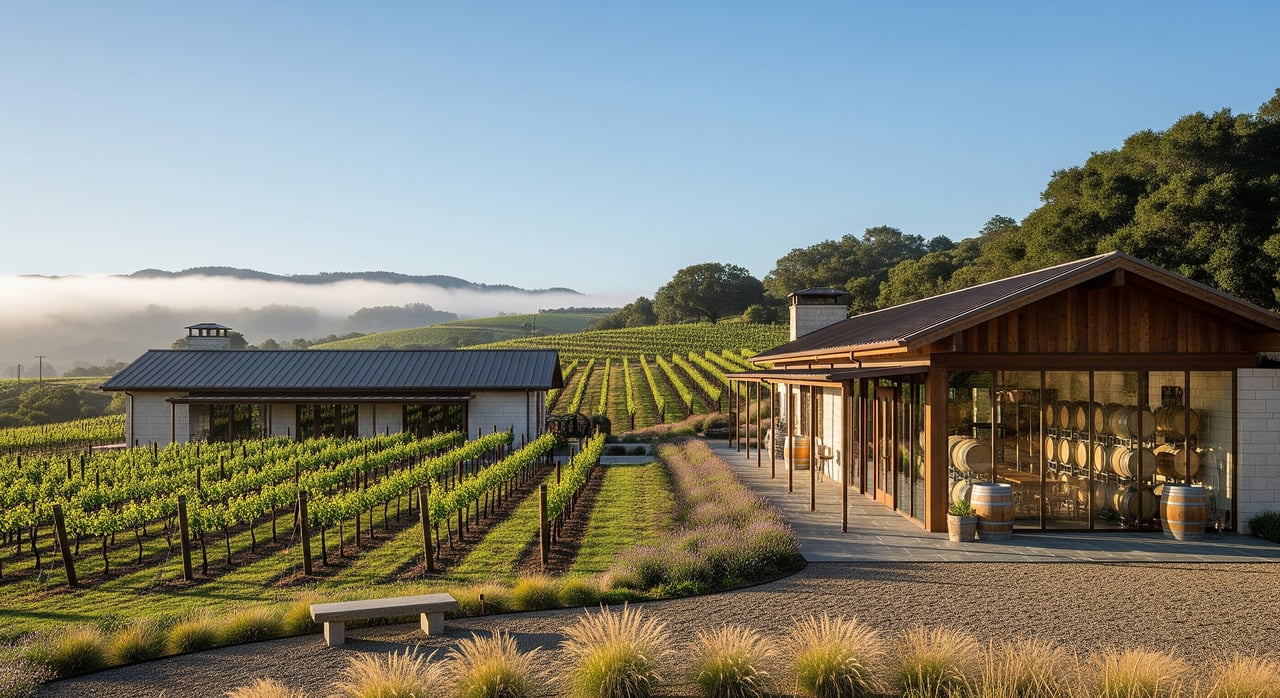
Want to be pouring your own Sebastopol wine by next harvest? The fastest path may not be building from scratch. You want production capacity and a tasting presence, but timelines, permits, and capital needs vary widely in West Sonoma. This guide compares building versus buying a winery in Sebastopol so you can choose the route that gets you to market with the least risk and the best fit. Let’s dive in.
Build vs buy: the quick answer
Buying an existing, permitted winery is usually the fastest way to start producing. Pure ownership transfers with no operational changes can move in a matter of months. Ground‑up development offers full design control, but it brings longer permitting, CEQA review, and construction. If speed to production is your priority, consider a permitted acquisition or custom crush while you plan long‑term moves.
Local rules: city or county
Sebastopol is an incorporated city surrounded by unincorporated Sonoma County. Your permitting path depends on the property’s jurisdiction. Inside city limits, the City of Sebastopol Planning Department governs zoning and approvals. In the unincorporated area, Permit Sonoma oversees Use Permits, modifications, and CEQA review, along with Fire Marshal input, water agencies, and utility districts. Confirm jurisdiction early so you can set expectations for process, timing, and studies.
Timelines at a glance
Acquisition, no changes
- Due diligence and escrow: typically 30 to 90 days.
- Permit transfer or local administrative review: often concurrent, 0 to 90 days.
- ABC license transfer: weeks to several months, based on license type.
- Potential start of production: about 1 to 6 months after close, if equipment and staff are ready.
Acquisition with changes
- Deeper diligence: 60 to 120 days.
- Minor or major Use Permit modification: 3 to 12 plus months, may include public hearings and CEQA.
- Total before changes take effect: about 6 to 18 plus months.
Ground‑up development
- Feasibility and pre‑application: 3 to 6 months.
- Entitlements and CEQA with public hearings: 6 to 24 plus months.
- Design and construction drawings: 3 to 9 months, often parallel.
- Construction: 9 to 18 months.
- Realistic total: about 18 to 54 plus months from site selection to first crush.
What stretches schedules
- CEQA Environmental Impact Report requirement.
- Public opposition or appeals.
- Off‑site improvements such as road work or sewer extensions.
- Environmental constraints like habitat or heritage trees.
- Wildfire mitigation and fire‑safety standards.
- Water rights or supply challenges, including new wells and allocations.
CapEx: where money goes
Both paths share many cost categories. You will budget for buildings and hospitality areas, equipment, site work, utilities, permits and studies, professional services, fire and life‑safety, and contingencies.
Acquisition focus
- Large purchase price is common, but immediate site‑work can be lower if the facility is turnkey.
- Expect retrofit costs for efficiency, compliance upgrades, tasting room refresh, and equipment replacement.
- Investigate environmental liabilities and wastewater compliance.
Ground‑up focus
- Higher site development and infrastructure costs, plus more soft costs for studies and mitigation.
- Bespoke design can boost process efficiency and integrate modern energy and water systems.
- Long‑term operating economics may improve at scale, but upfront capital is higher.
Opportunity cost and brand speed
Time to revenue matters. If you delay production by multiple vintages, you carry lost revenue on top of financing costs. Buying a permitted facility in a known Sebastopol or West Sonoma corridor can deliver immediate market presence. Custom crush converts capacity into a variable cost with minimal capital, which can help you test product and channels, though per‑case costs may be higher over time.
Permit limits to watch
Most Sonoma County winery permits include conditions that govern operations. Common constraints include maximum annual case production, visitation caps and hours, event allowances and attendance, parking and circulation standards, wastewater system conditions, and mitigation measures from CEQA. If your growth plan needs more volume or hospitality, you may need a modification process that adds time and studies.
Alternatives: custom crush now
If you need bottles in market quickly, custom crush or contract production can be a smart bridge. You avoid land‑use entitlements for production while you secure a site or pursue permits. If you plan to host tastings or hospitality, you will still need local approvals for those activities even if production is offsite.
Decision framework: right‑size your path
- Define capacity, hospitality model, distribution channels, timeline to first bottle, and total budget including working capital.
- Set location needs: Sebastopol city limits, West Sonoma AVAs, or flexible.
- Decide how critical immediate production and a tasting presence are to your brand.
- Search for permitted assets and custom crush partners. Screen for existing production and visitation caps, sewer or wastewater path, fire access, and water supply.
- If no suitable asset fits, scope a ground‑up feasibility with planning staff to understand entitlement risk and CEQA.
- Compare payback and NPV under both paths, including delayed revenue and opportunity cost of capital.
Acquisition due diligence checklist
- Title, easements, and deed restrictions.
- All active Use Permits and conditions, including production, visitation, events, and hours.
- Transferability of the Use Permit and any required notice or review.
- Building permits, as‑builts, and certificates of occupancy.
- Wastewater system type, discharge limits, and maintenance records.
- Water source, rights or allocations, metering, and historical use.
- Fire compliance, access road standards, and defensible space.
- Environmental review including Phase I ESA and any hazardous materials.
- Equipment inventory and condition, warranties, and spare parts.
- ABC license status and transfer path for tasting or retail.
- Production, sourcing, staffing, financials, and vendor contracts.
- Community or neighbor issues, past complaints, or enforcement.
- Preliminary retrofit and expansion cost estimates aligned to your plan.
Ground‑up feasibility checklist
- Confirm jurisdiction and hold a pre‑application meeting with planning staff.
- CEQA screening and likely scope: Initial Study, Negative Declaration, or EIR.
- Required technical studies: biology, cultural, traffic and VMT, noise, stormwater, hydrology, geotechnical.
- Infrastructure feasibility: road improvements, sewer or wastewater approach, water and power capacity.
- Wildfire and emergency access standards with Cal Fire or the Fire Marshal.
- Cost and time estimates for mitigation that may be required.
- Agricultural preserve or Williamson Act considerations where applicable.
- Community engagement plan to support public hearings.
Consultant team: when to engage
- Land‑use planner or permit consultant for entitlement and CEQA strategy.
- Land‑use and winery attorney for permits, title, and transfer language.
- Civil, wastewater, hydrology, and geotechnical engineers for site design and utilities.
- Architect and process designer for efficient layouts and capacity programming.
- Structural and MEP engineers for utility upgrades and budget fidelity.
- Environmental biologist and cultural resources specialist for studies and mitigation.
- Fire protection consultant or direct coordination with the Fire Marshal.
- Broker experienced in winery assets for comparables and transaction structure.
- Accounting and tax counsel for CapEx versus OpEx modeling and incentives.
- Equipment suppliers and production consultants for cost and timeline validation.
- ABC license attorney or consultant for tasting and retail licensing.
Putting it together in Sebastopol
If you can find a permitted facility that matches your production and hospitality needs, acquisition is usually the fastest and cleanest path to market. If your brand requires a specific site or larger scale, ground‑up development can deliver an optimized operation, but expect a longer runway and higher upfront capital. Many operators blend approaches by acquiring a facility for near‑term capacity while planning a larger campus or by using custom crush to keep revenue moving as permits progress.
Ready to map the best path for your goals in West Sonoma? For a confidential conversation and access to both public and off‑market opportunities, connect with the team at Wine Country Consultants.
FAQs
What is the fastest way to produce wine in Sebastopol?
- Acquiring a permitted winery with no operational changes or using a custom crush provider typically gets you to market in months rather than years.
How long does a new Sonoma County winery permit take?
- Ground‑up projects often require 18 to 54 plus months from site selection to production due to CEQA review, public hearings, design, and construction.
Do winery Use Permits transfer to a new owner?
- Most Use Permits run with the land, but the county or city may require a transfer or notice, and changes in operations can trigger a modification process.
Can I expand events or visitation after buying a winery?
- Increases in production, visitation, hours, or events usually require a Use Permit modification and may include CEQA review and public hearings.
Is a sewer connection required for a Sebastopol winery?
- Not always. Many rural wineries operate with permitted on‑site wastewater systems. Sewer availability can simplify permitting but may add connection fees and off‑site improvements.
How can I reduce entitlement risk in West Sonoma?
- Confirm jurisdiction early, review all permit conditions in writing, meet with planning staff, build a complete technical team, and budget for CEQA mitigation and wildfire standards.