Healdsburg Vineyard Estate Lifestyle Through Smart Design
June 18, 2026
June 18, 2026
What makes a vineyard estate in Healdsburg feel effortless instead of overbuilt? Usually, it comes down to how well the home works with the land, the climate, and the realities of a wine-country property. If you are thinking about designing or evaluating an estate for indoor-outdoor living, it helps to understand what fits this setting and what can complicate a project. Let’s dive in.
Healdsburg is deeply tied to Sonoma Wine Country, with a mild climate, nearby Russian River recreation, protected open-space assets such as Healdsburg Ridge and Fitch Mountain, and about 60 wineries surrounding the city. The broader setting also includes established Sonoma County AVAs like Russian River Valley, Dry Creek Valley, and Alexander Valley. That local identity naturally supports homes that open to views, vines, and hospitality-centered living.
The climate is part of the appeal. Healdsburg describes summer temperatures in the 70s to 90s and winter temperatures in the 30s to 60s, which gives you a long season for terraces, loggias, and outdoor gathering spaces. In practical terms, that means an estate here can treat outdoor space as part of daily living, not just seasonal overflow.
In Healdsburg, strong estate design starts with site placement. The city’s design guidance recommends working with topography rather than flattening a site, including terracing buildings into hillsides, minimizing cut and fill, and stepping the first floor along sloped streets. That approach can help a home feel grounded in the landscape rather than imposed on it.
This matters even more on visible or hillside parcels. Healdsburg’s guidance also calls for placing structures to minimize obstruction of views and site lines. For you, that means a successful design is not only about the house itself, but also about how it preserves the experience of the land around it.
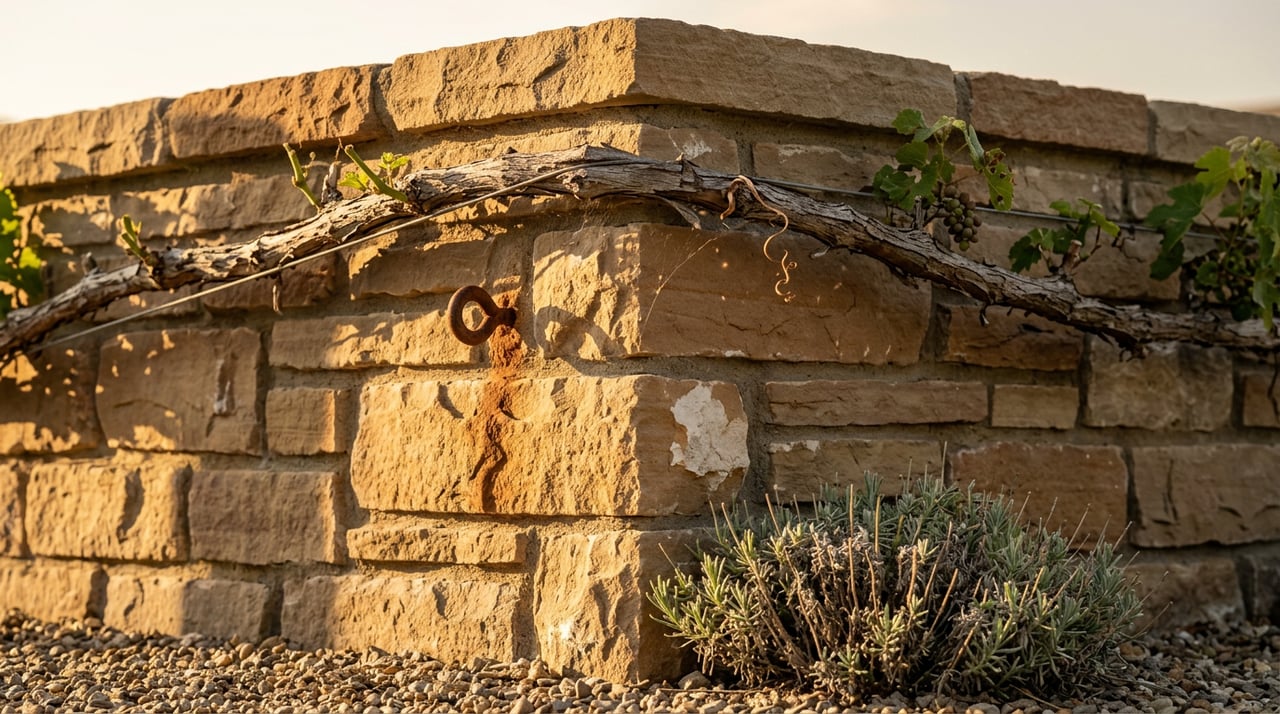
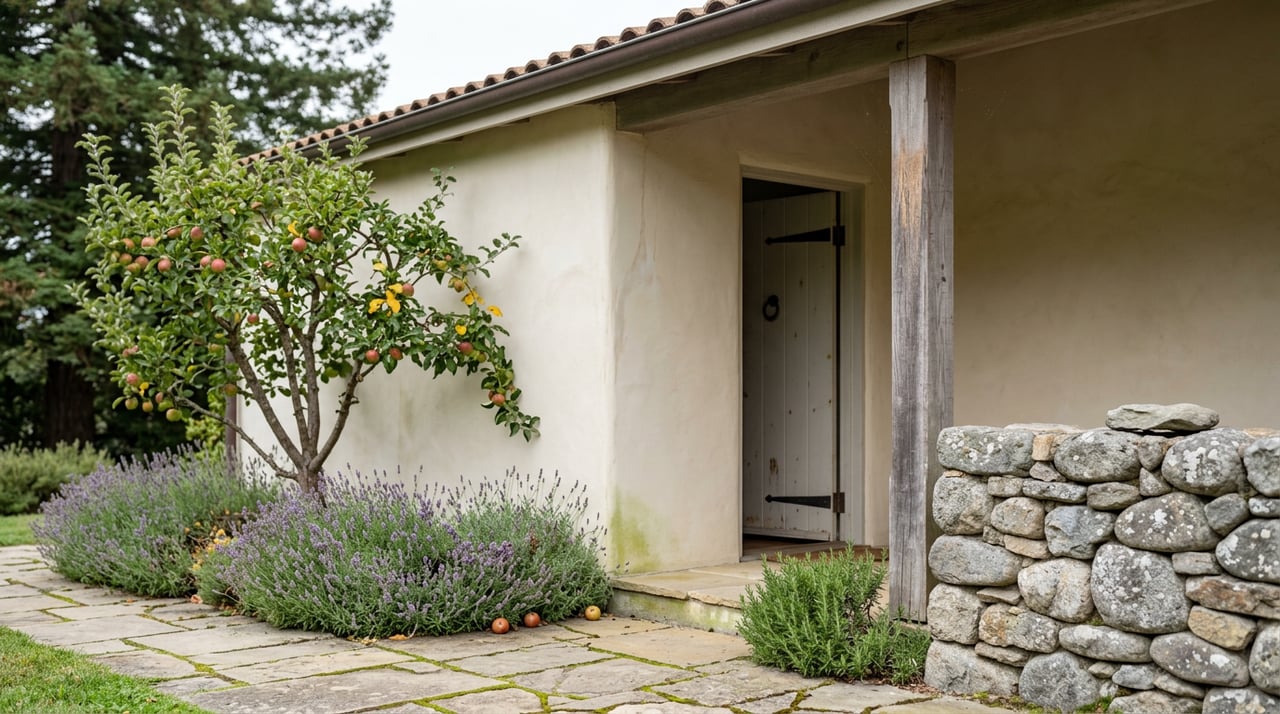
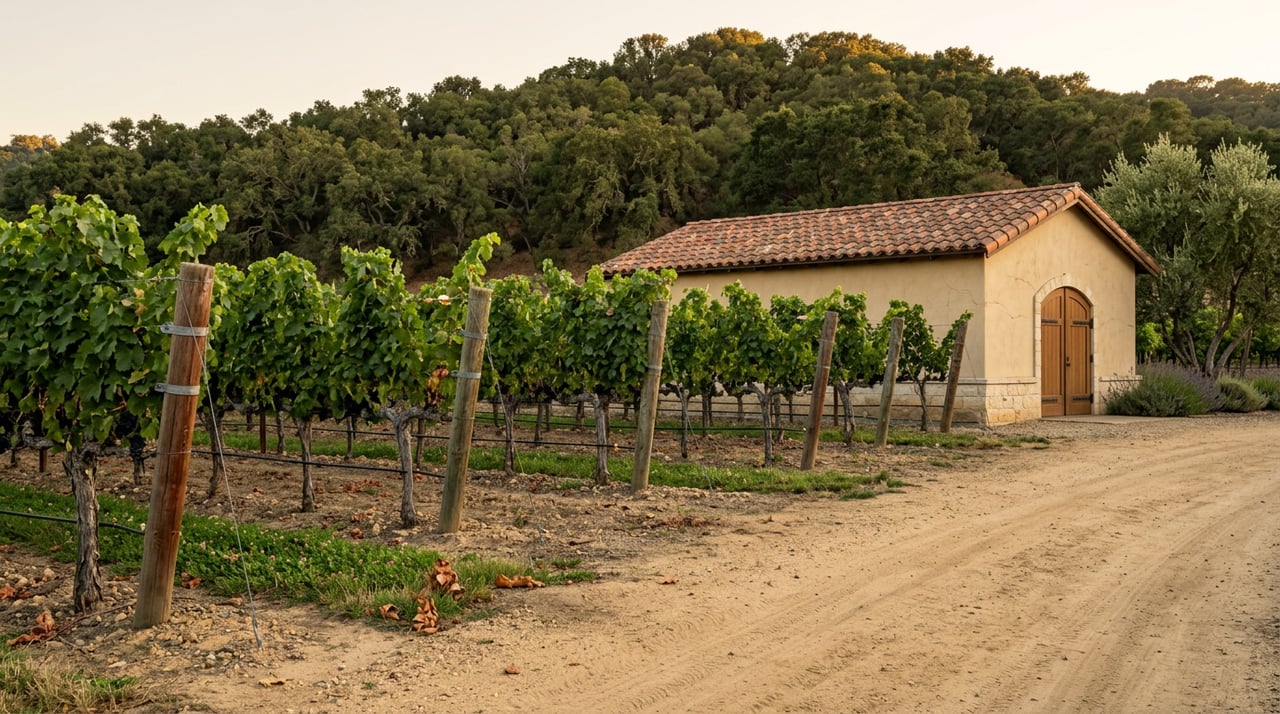
An authentically local estate usually feels quiet in the landscape. Healdsburg’s design guidance points toward low roof forms that follow the ridge silhouette, along with darker, textured roof and wall materials that blend with surrounding hillsides. Those choices can reduce visual impact while reinforcing a more timeless wine-country character.
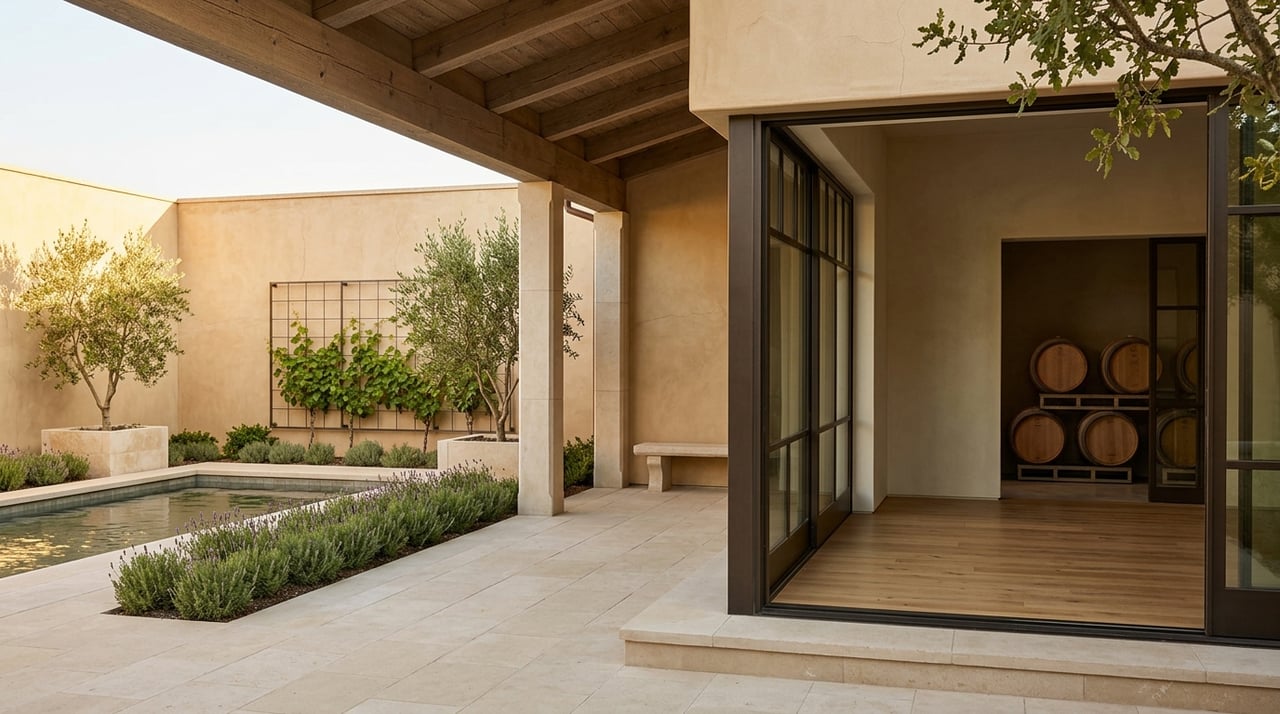
For vineyard estates, restrained massing often does more than improve appearance. It can also make indoor-outdoor spaces feel more intimate, connected, and sheltered from sun and wind. Instead of one oversized gesture, the better approach is often a series of connected spaces that unfold across the site.
A well-designed Healdsburg estate often works best as a sequence of outdoor rooms. On larger or sloped parcels, that may include:
This kind of arrangement fits the local setting because it respects topography, protects views, and makes the property easier to use. It also helps separate hospitality spaces from operational needs, which is especially useful on estates with agricultural or equipment-related activity.
One of the most overlooked design decisions is circulation. A practical estate layout keeps guest movement away from deliveries, equipment access, and utility yards, so the property feels calm without making day-to-day operations harder. That is especially important on rural parcels where service functions may be more visible or more complex than on a typical residential lot.
If you are evaluating a property, pay attention to whether the site allows for both experiences at once. The most successful vineyard estates often make logistics disappear without pretending they do not exist.
In Healdsburg, outdoor living should feel natural to the climate. The city’s Water Efficient Landscape Ordinance applies to new projects and larger remodels with landscaping, and the city’s CALGreen guidance points to water-conserving fixtures, irrigation controllers, and water reuse as core measures. That makes drought-tolerant planting, zoned irrigation, and climate-appropriate hardscape especially relevant.
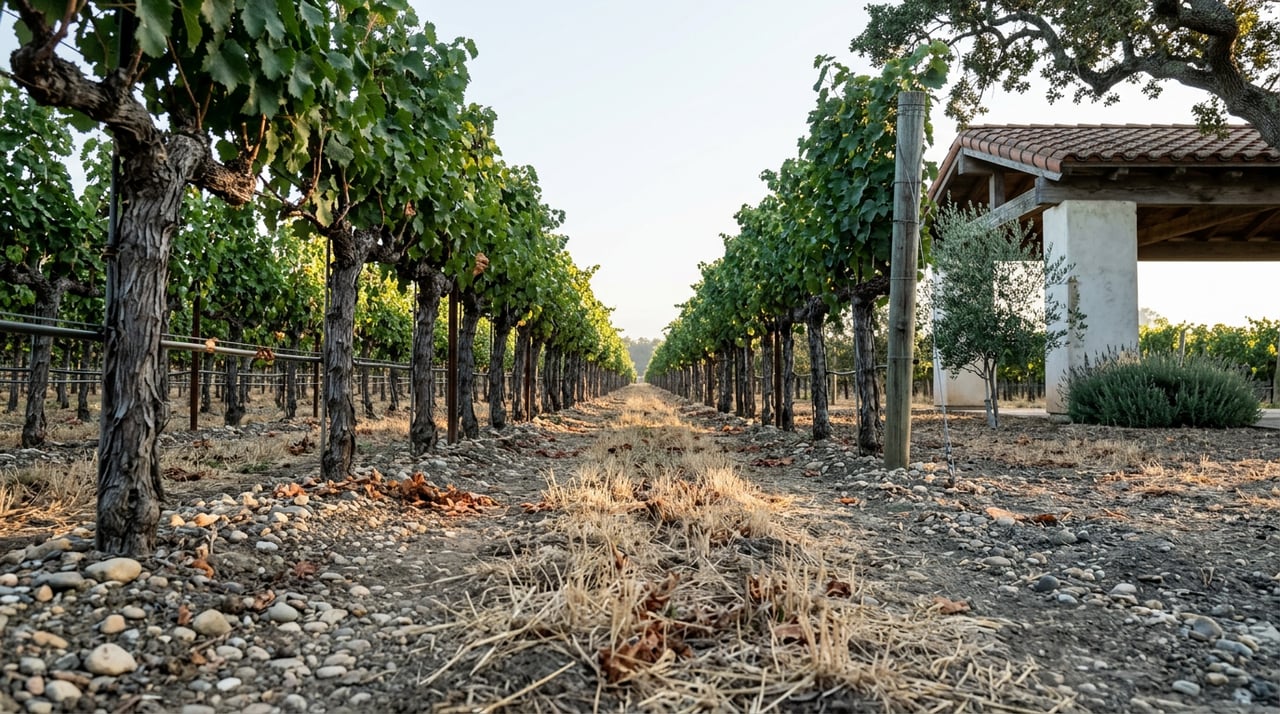
For many estates, this supports an agricultural landscape language rather than a lawn-heavy one. Vine rows, structured native or drought-conscious planting, shaded terraces, and durable hardscape often fit the setting better and can simplify long-term maintenance.
Water and utility planning can shape design choices from the beginning. Inside city limits, Healdsburg provides water and sewer service. Outside the city, Sonoma County says homes without public sewer must use septic systems, and a well construction permit is required for new or replacement supply wells.
That distinction matters because rural assumptions can create delays. Permit Sonoma also says non-emergency well permits are currently suspended under a Sonoma County Superior Court order, so any design that depends on a new private well should be treated as provisional until county status is confirmed.
If a parcel is near the Russian River or within Sonoma County’s Public Trust Review Area, groundwater well review may involve added scrutiny. The county requires evaluation of possible impacts to navigable waterways before approving a new or replacement groundwater well in that area. The ordinance description also notes water-conservation measures for new wells.
For you, the takeaway is simple. A great estate concept should not get too far ahead of the site’s water realities. Utility assumptions need to be tested early, especially on rural and river-adjacent properties.
In Healdsburg and surrounding Sonoma County areas, estate design is tied closely to planning review. Depending on the parcel, a project may require zoning clearance before a building permit and may involve setback review near scenic roadways or waterways. Rural projects can also trigger grading, encroachment, stormwater, septic, and well permits.
That is why early feasibility matters. Before expanding a concept, it is smart to confirm what the site can support in terms of access, slope, utilities, and review pathways.
If the property is in one of Healdsburg’s historic districts, exterior changes and new construction are subject to special review. The city also states that major design review is required for accessory buildings over 400 square feet, except ADUs. These rules can affect guest houses, studios, pool structures, and other secondary buildings that often support indoor-outdoor living.
At the same time, the city allows ADUs up to 1,200 square feet and JADUs up to 500 square feet. That can make a secondary living space a useful way to add guest or caregiver quarters without enlarging the main residence more than necessary.
Indoor-outdoor living in wine country should also be resilient. Healdsburg’s building-code page lists the California Wildland-Urban Interface Code and CALGreen among the Title 24 codes used locally. CAL FIRE says 100 feet of defensible space is required by law, and the State Fire Marshal identifies building construction and defensible space as the two primary parts of interface-fire protection.
For estate planning, that affects more than roofing. Decking, fencing, planting, and the first five feet around the structure all deserve careful attention. CAL FIRE also recommends ember-resistant hardscape near the home, which can support a more durable and better-performing outdoor-living zone.
Topography brings beauty, but it can also bring risk. Healdsburg says landslides are common and may result from heavy rain, earthquakes, or improper grading and drainage. The city also notes that swales and ravines on steep slopes may generate debris flows.
On hillside vineyard properties, drainage, retaining walls, and geotechnical review are part of the design story from the beginning. If you are buying, selling, or planning improvements, these factors deserve the same attention as views and finishes.
The strongest vineyard estates in Healdsburg tend to share a few qualities. They use restrained massing, orient outdoor rooms to the site’s natural views, and choose materials that sit quietly in the hillsides. They also respect the operational and regulatory realities that come with rural or semi-rural land.
That balance is what gives a property staying power. It is not just about creating beautiful moments. It is about shaping an estate that feels rooted in place, works well over time, and supports the legacy value of the asset.
If you are considering a Healdsburg vineyard estate, thoughtful planning at the intersection of design, land use, and infrastructure can make all the difference. For discreet guidance on vineyard, winery, and legacy estate opportunities, schedule a confidential consultation with Wine Country Consultants.

We are a family real estate firm focused on legacy vineyards and wineries. Our unique approach to buying and selling properties highlights a deep understanding of the historical importance every property holds as well as its potential in today’s market. Contact us today to find out how we can be of assistance to you!