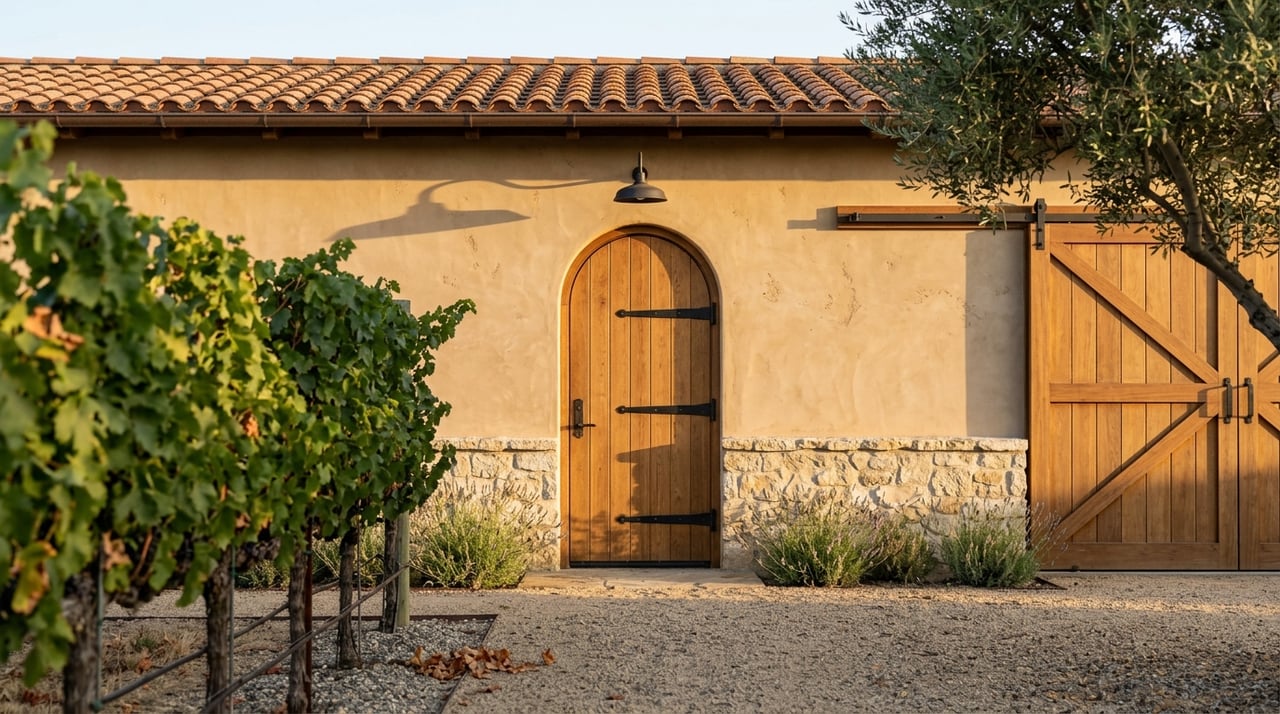
Is Napa Vineyard Winery Investment Right for Your Portfolio?
June 25, 2026
June 25, 2026
What makes a Napa vineyard or winery asset different from other real estate investments? In Napa, you are not just looking at land. You are looking at a tightly regulated, agriculture-driven asset class shaped by production economics, limited supply, and long-term stewardship. If you are thinking about diversification, understanding those layers can help you evaluate where these properties may fit and where they may not. Let’s dive in.
Napa vineyard and winery assets sit in a market where agriculture, and especially winegrapes, plays an outsized role. Napa County’s 2024 crop report shows gross agricultural production of about $1.0348 billion, with winegrapes accounting for roughly $1.0310 billion across 45,967 bearing acres. That means winegrapes made up about 99.6% of county agricultural production, which helps explain why vineyard quality, appellation, and varietal mix matter so much to value.
That concentration also means Napa is not a simple rural land story. The county treats agriculture as a primary land use and directs most housing and commercial growth to incorporated or urbanized areas. In practical terms, many vineyard and winery properties trade more like specialized operating real estate than passive land-banking opportunities.
The county assessor has also noted that vineyard value is made up of several parts: land, non-living improvements, and the vines themselves. That distinction matters because your underwriting should look beyond acreage alone. Two properties with similar acre counts can perform very differently based on plantings, infrastructure, and permitted use.
For many buyers, the portfolio appeal of Napa vineyard and winery assets comes down to three ideas: current income, long-term appreciation, and diversification. Each one can play a role, but the mix depends on the specific asset you buy. A producing vineyard has a very different profile from an operational winery or a mixed-use estate.
Income may come from grape sales, lease structures, custom-crush activity, winery operations, or hospitality-related spending. In Napa, tourism adds another layer to that equation. Visit Napa Valley reports that the county welcomed 3.7 million visitors in 2023, generating $2.5 billion in visitor spending and $107.5 million in tax revenue.
That tourism base helps explain why some winery and estate properties have a meaningful non-farm revenue component. It also explains why some owners value a lifestyle benefit alongside financial return. That lifestyle value can be real for an owner, but it is best viewed as personal utility rather than a predictable investment yield.
A useful frame for diversification is farmland as a broader real asset class. Research summarized by the University of Illinois farmdoc notes that farmland has shown strong long-run returns, relatively low volatility, weak correlation to equity markets, and a positive relationship with inflation. Those traits are part of why some investors consider agricultural property as a portfolio diversifier.
Still, Napa should not be treated as a generic farmland purchase. It is a narrower, more specialized market with local regulatory constraints, quality differences, and operating complexity. The portfolio case may be attractive, but it only holds up when the property itself is well selected and carefully underwritten.
In Napa, value is often tied to a bundle of factors rather than a single headline number. Site quality matters. Plantings matter. Water matters. Permits matter. The market often prices these assets as a combination of land characteristics, vineyard improvements, and legally permitted use.
Varietal economics are one example. Napa County’s crop report shows meaningful price dispersion across grape types, with Cabernet Franc averaging $11,332 per ton, Chardonnay averaging $3,790 per ton, and Merlot averaging $4,752 per ton. Those gaps help show why varietal mix can influence revenue expectations and valuation.
Land scarcity also plays a role. County land-use rules preserve agricultural land and limit subdivision through large minimum parcel sizes in many areas. That supports the long-term agricultural identity of the region, but it also means you are often buying into a constrained supply environment rather than a market built for frequent redevelopment.
One of the most important portfolio questions is simple: What exactly are you buying? A vineyard parcel, a producing vineyard, an operational winery, and a mixed-use estate can all sit under the same broad Napa label, yet they may behave very differently.
A vineyard land acquisition may offer long-term agricultural exposure and future planting potential, but it may not deliver immediate operating income. A producing vineyard may bring crop-based income, though it also comes with vine age, farming, and replanting considerations. An operational winery adds permit, capacity, and business-risk layers that go far beyond farming alone.
A mixed-use estate can bring hospitality and lifestyle dimensions into the picture. That can widen the value proposition, but it also means you are underwriting more than one business logic at once. You may be evaluating agriculture, commercial use, operating complexity, and personal-use value together.
In Napa, regulation is not a side note. It is central to the asset. County rules around agriculture, land use, and winery operations influence both current value and future flexibility.
Napa County’s General Plan protects agriculture, watershed, and open space lands, and the county’s agricultural preserve and Williamson Act framework can reinforce long-hold ownership. Contracted parcels may be assessed at the lower of factored Proposition 13 base-year value or restricted agricultural and open-space value. That can help support lower carrying costs, but it also reinforces the idea that these assets are generally meant for agricultural continuity, not quick conversion.
Winery permitting is another critical variable. Napa County’s winery code makes production capacity permit-based, and for wineries first established after the ordinance, at least 75% of the grapes used for still wine, or the still wine used for sparkling wine, must be grown within Napa County. If you are evaluating a winery asset, permit clarity and sourcing structure are essential parts of due diligence.
Napa vineyard and winery assets can add diversification benefits, but they also come with real operational and environmental risks. These risks are not abstract. They directly affect income stability, carrying costs, and capital planning.
Napa County identifies increasing risks from wildfire, drought, heat, and flooding. The county also notes that water is a precious and limited resource in drought-prone Napa County. For a buyer, that makes water access, storage, conservation practices, and site resilience key parts of underwriting.
Flooding risk can also become more complex after wildfire. County guidance notes that burned soils may absorb less water, increasing flash-flood and mudflow risk for up to five years after a fire. That means drainage, erosion controls, and post-fire recovery planning deserve close attention before you commit capital.
Vines do not last forever. The county assessor notes that vines typically have a 25- to 30-year life. That means replanting is not an exception in vineyard ownership. It is part of the long-term capital cycle.
That cycle can affect both cash flow and taxes. The assessor notes that vineyards are reassessed on changes of ownership and on new construction or replanting, while new or replanted vines are exempt from taxation for the first three years because they are not yet in full production. If you are evaluating a mature vineyard, you should understand how vine age and future replant timing may affect near-term performance.
Post-fire vineyard recovery rules also show how constrained redevelopment can be. Napa County says legally established fire-damaged vineyards may be replanted without a Track II application only if there is no expansion of the footprint, no change in row direction, and no new subsurface drainage unless needed to correct erosion or water-quality issues. That supports continuity, but it also limits redesign flexibility.
Property taxes can materially shape holding costs in California. Under Proposition 13, property is generally reassessed only upon change of ownership or new construction, and annual increases are typically capped at 2% unless reassessment occurs. Tax bills can also include additional levies and special assessments.
For a Napa buyer, this means a long-held property may show a relatively favorable historic tax base, but that number may not reflect what you will pay after acquisition. Major capital work can also affect carrying costs. When you are comparing opportunities, tax structure should be reviewed as part of the full underwriting picture rather than as an afterthought.
For most buyers, Napa vineyard and winery assets make the most sense as a long-duration alternative real-asset allocation rather than as a liquid income substitute. They may offer a blend of agricultural income, scarcity-driven land value, and selective operating upside. But they are not typically simple, passive, or highly liquid investments.
The strongest cases usually combine high-quality site characteristics, clear operating rights, dependable water considerations, and a realistic hold period. In other words, the right fit depends less on Napa’s reputation and more on the exact version of the asset you are acquiring. Precision matters.
That is also why local expertise matters so much in this market. A technically attractive property on paper can still carry permit, infrastructure, water, or capital-cycle issues that materially change the investment thesis. Careful coordination with valuation, tax, legal, and vineyard or winery specialists can help you assess the asset more clearly before you move forward.
If you are weighing how a vineyard, winery, or estate property could fit within a broader investment strategy, working with an advisor who understands both the local market and the operating realities can make a meaningful difference. For discreet, experienced guidance on Napa legacy assets, Wine Country Consultants can help you evaluate opportunities with the care and technical perspective these properties require.




We are a family real estate firm focused on legacy vineyards and wineries. Our unique approach to buying and selling properties highlights a deep understanding of the historical importance every property holds as well as its potential in today’s market. Contact us today to find out how we can be of assistance to you!