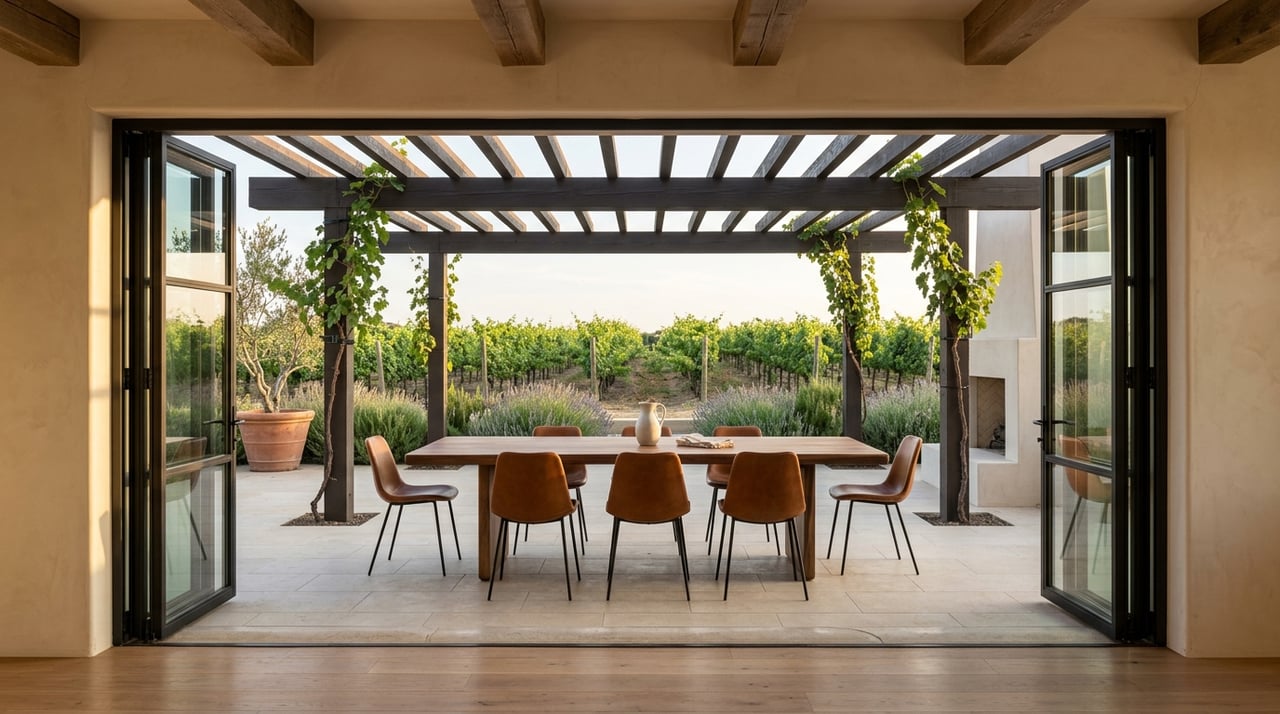
How Culinary Tourism Shapes Yountville Winery Estates
July 2, 2026
July 2, 2026
What gives a winery estate in Yountville lasting appeal? It is not just vineyard rows or a beautiful tasting space. In this part of Napa Valley, the strongest opportunities often connect wine, dining, lodging, and walkable visitor experiences in a way few markets can match. If you are evaluating a winery estate, vineyard property, or hospitality-driven wine asset here, it helps to understand how culinary tourism shapes demand. Let’s dive in.
Yountville has built its identity around a compact, walkable visitor core. Town and chamber materials describe a one-mile main street where restaurants, tasting rooms, hotels, art, and scenery are all within walking distance. For winery estates and wine-related properties, that creates a rare environment where guests can move easily from a tasting to dinner, from lodging to retail, and from one reservation to the next.
That kind of visitor flow matters. In many wine regions, a property depends heavily on drive-by traffic or broad regional awareness. In Yountville, the setting supports a more intentional guest journey, where a well-positioned estate or tasting program can benefit from the town’s existing rhythm of arrivals, reservations, and overnight stays.
Yountville’s reputation as a dining destination is not incidental. Michelin listings underscore the concentration of culinary demand, with The French Laundry recognized as a three-star destination and nearby venues like Bouchon, Ad Hoc, and Ciccio reinforcing the town’s food-first identity.
For buyers and owners of winery estates, this matters because culinary tourism tends to bring visitors who are already planning their day carefully. They are not simply looking for a quick stop. They are building itineraries around tastings, meals, accommodations, and memorable experiences, which can create a stronger fit for reservation-based hospitality.
Restaurants do more than add prestige to the town. They help create a setting where wine becomes part of a broader lifestyle experience. When guests come to Yountville for a celebrated meal, that often opens the door to tasting appointments, bottle purchases, club relationships, and return visits.
Town visitor materials also note that many boutique, small-production wineries sell exclusively through local tasting rooms or member-only wine clubs. That means tasting rooms in Yountville are not just brand showcases. They can serve as direct sales channels tied closely to the visitor experience.
The scale of Napa Valley tourism adds important context. Visit Napa Valley’s 2023 Visitor Profile and Economic Impact Study reported 3.7 million visitors in 2023 and $2.5 billion in local economic impact, along with 16,000 tourism jobs. The same report found a 95% likelihood that visitors will return.
That return rate is especially important in a market built on repeat discovery. A first trip may introduce a guest to Yountville’s restaurants and tasting rooms. A later trip may deepen the relationship through club membership, private appointments, or a more targeted search for exclusive wine experiences.
Town materials show how central tourism is to Yountville’s local economy. The town reported more than 450 hotel and inn rooms, and finance materials say tourism-generated transient occupancy tax and sales tax are key revenue drivers, with sales tax revenue primarily coming from restaurants. Visit Napa Valley also stated that visitor-paid transient occupancy tax accounted for 65% of Yountville’s general fund budget in 2023.
For estate buyers and investors, that points to a practical truth. The strength of a Yountville wine asset often depends less on local daytime population and more on its ability to connect with overnight guests, dining traffic, and destination-oriented visitors already spending time in town.
In many luxury wine markets, a beautiful property can still feel isolated from visitor activity. Yountville is different because the town’s layout supports low-friction movement between uses. Guests can stay nearby, dine nearby, and taste nearby, all within a walkable core.
For a winery estate or tasting-room opportunity, that can create advantages in visibility, convenience, and guest conversion. A visitor who already has dinner booked may be far more likely to add a tasting before check-in or the next morning. That kind of built-in itinerary logic can be powerful.
The town’s visitor infrastructure supports multi-stop planning. Yountville maintains an interactive business directory covering hotels, tasting rooms, restaurants, recreation, entertainment, and services. That type of navigation makes it easier for visitors to create reservation-heavy schedules rather than casual, unplanned stops.
This supports a hospitality model based on quality of visit rather than sheer volume of traffic. For many estate owners, that can align well with private tastings, curated guest experiences, and relationship-driven wine sales.
Yountville does not rely on individual businesses alone to attract visitors. The town and chamber actively support shared programming, including Sip Yountville, Art, Sip & Stroll, and a Wine & Beer Passport featuring multiple participating locations. The town also highlighted events like a Chandon sustainability panel and cocktail hour.
These programs suggest a visitor economy designed to keep people moving through town and staying engaged longer. For a winery estate, that kind of coordination can strengthen the surrounding ecosystem. Guests who come for an event, tasting trail, or cultural activity may also book meals, hotel stays, and wine appointments that extend beyond a single stop.
If you are considering a Yountville winery estate, the real opportunity may lie in how the property fits into the town’s broader hospitality network. In this setting, a successful wine asset is often part of a complete visitor experience rather than a stand-alone destination.
That may include proximity to pedestrian traffic, a tasting format that works well with reservations, and a guest experience that complements nearby restaurants and accommodations. In Yountville, synergy is not a buzzword. It is often part of the business case.
Because many small-production wineries sell through local tasting rooms or wine clubs, estate value may be tied not only to land or structures but also to hospitality function. A tasting room here can help generate brand exposure, guest loyalty, and direct-to-consumer sales.
That makes program design especially important. The strongest concept is often one that understands how visitors actually use the town, moving between meals, strolls, hotel stays, and scheduled wine experiences.
In Yountville, location and hospitality appeal are only part of the story. The town’s zoning rules make site selection and permitting central considerations. In the Old Town Commercial district, new lodging, full-service restaurants, wine tasting rooms, bars and nightclubs, and several other uses require a use permit and design review.
There are also rules tied to street orientation. Ground-floor uses on Washington Street are expected to be primarily pedestrian-oriented, and full-service restaurants are allowed only on the west side of Washington Street. For buyers, that means frontage, district, and entitlement path should be evaluated early, not later.
The code defines a wine tasting room as a retail marketing, education, and sampling venue for winery products. Food pairings are allowed only as an ancillary use, food cannot be prepared on-site, meal service cannot turn the space into a restaurant, special events need permit approval, and the business must have a Type 02 ABC license.
That framework matters because it shapes the most viable hospitality model. In many cases, the best approach is to keep the tasting-room experience clearly focused on wine while using nearby dining partners to round out the guest experience.
Yountville is not just a famous town. It is also its own American Viticultural Area within Napa Valley. Federal records say the Yountville AVA lies entirely within Napa Valley, and the original rulemaking described it as roughly 8,260 acres with about 3,500 planted to vineyards, along with distinct climate and soil conditions.
For estate owners and buyers, that adds another layer of identity. Provenance can support a property narrative that blends hospitality, wine quality, and a specific sense of place. In a market where storytelling matters, AVA recognition can strengthen how an estate is positioned.
If you are weighing a winery estate, tasting-room site, or vineyard asset in Yountville, it helps to think beyond the obvious visuals. A beautiful property is only part of the picture. The deeper question is how well the asset connects to the town’s culinary tourism engine.
A thoughtful review should include:
When these factors align, the result can be more than a luxury wine property. It can be a highly differentiated asset in one of the most experience-driven markets in the valley.
Yountville looks simple from the sidewalk, but the real estate decisions behind a winery estate here are rarely simple. Hospitality demand, visitor behavior, direct sales strategy, and municipal rules all influence how a property performs and how it should be valued.
That is why buyers and sellers often benefit from an advisor who understands both the land and the business model attached to it. In a market shaped by legacy, regulation, and reputation, careful planning can protect value and uncover opportunity.
If you are exploring a Yountville winery estate, considering a legacy transition, or evaluating a hospitality-driven wine asset, Wine Country Consultants can help you approach the opportunity with local insight, discretion, and a clear strategy.


We are a family real estate firm focused on legacy vineyards and wineries. Our unique approach to buying and selling properties highlights a deep understanding of the historical importance every property holds as well as its potential in today’s market. Contact us today to find out how we can be of assistance to you!