How Sebastopol’s Cool-Climate Terroir Shapes Estate Values
June 11, 2026
June 11, 2026
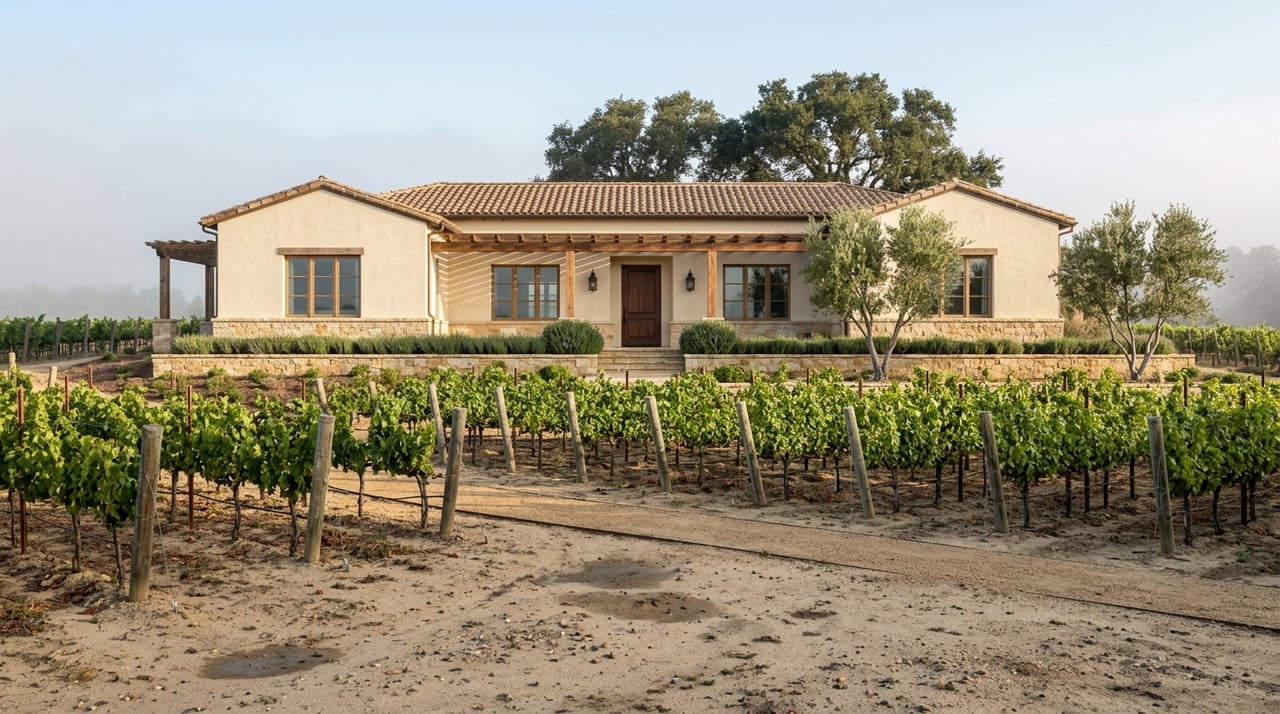
If you are looking at estate values in Sebastopol, one question matters more than almost any other: what, exactly, is the land capable of producing? In this corner of Sonoma County, value is not just about acreage or a prestigious county name. It is tied to a cool-climate growing environment, site-specific soils, and the operating details that shape how Pinot Noir and Chardonnay perform over time. If you want to understand why some vineyard estates command stronger pricing than others, this is where to start. Let’s dive in.
Sebastopol sits within one of California’s most recognized cool-climate winegrowing areas, and that regional context matters when buyers and sellers evaluate estate value. The Russian River Valley AVA stretches from Healdsburg to Sebastopol, and Sonoma County Winegrowers notes that its sub-areas differ meaningfully in soils, elevation, aspect, and climate.
Within that broader setting, Green Valley of Russian River Valley is an established AVA bounded by Sebastopol, Occidental, and Forestville. As of June 8, 2026, Sebastopol Hills remains a proposed AVA rather than an established one, but the pending petition still helps frame how the market views this area: as a distinct, cool, vineyard-focused pocket with meaningful overlap into existing appellation geography.
That distinction is important for estate analysis. AVA identity can support recognition and comparability, but it does not create value on its own. Instead, it gives buyers another lens for understanding how a property fits into the wider market for premium vineyard assets.
The clearest reason Sebastopol draws attention is climate. The federal rule establishing Green Valley described the area as a UC Davis Region I growing area, which is a cool-climate zone based on degree-days.
That same rule noted that the area experiences cool nights and early morning fog, conditions that can lengthen the growing season, allow lower sugar levels, and help preserve acidity. It also identified Chardonnay and Pinot Noir as especially well suited to the area.
Sonoma County Winegrowers reinforces that picture. Its 2023 overview says Green Valley traps fog and stays relatively cool through veraison and harvest, while its Russian River Valley neighborhood guide describes the Sebastopol Hills as about as cool as it gets within Russian River Valley, with cold winds and unsheltered exposure that can help fruit hang longer.
For estate values, this matters because climate influences what the land can consistently support. In Sebastopol, the market is often responding to a site’s ability to produce fruit associated with high-end West Sonoma County styles rather than simply counting gross acreage.
Sebastopol’s climate profile lines up closely with the varieties most associated with the area. The proposed Sebastopol Hills petition materials describe the region as predominantly planted to Pinot Noir and Chardonnay, with roughly 1,113 planted and productive vineyard acres across at least 50 vineyards and two licensed and bonded wineries.
That suggests a landscape defined largely by active vineyard use, not just undeveloped agricultural land. For buyers, that can change how an estate is underwritten, how comparable sales are chosen, and what kind of upside or risk is attached to the property.
There is also a broader county context. In 2025, Sonoma County had 15,176 acres of Chardonnay and 12,686 acres of Pinot Noir, making it the leading California county for acreage in both varieties. In practical terms, that means Sebastopol is competing inside a deep, established premium market for these grapes, not in a generic rural land category.
Climate may draw attention first, but soils often help explain why one Sebastopol estate performs differently from another. Two soil series in the local conversation are Goldridge and Sebastopol, both cited in federal, USDA, and petition materials connected to the area.
USDA describes Goldridge soils as deep to very deep and moderately well drained, formed from material weathered from weakly consolidated sandstone. These soils occur on rolling uplands with slopes from 2 to 50 percent, in a climate with about 45 inches of annual precipitation and a mean annual temperature of 56 degrees Fahrenheit.
USDA describes Sebastopol soils as deep and well drained, formed from soft sandstone on old coastal terraces. These soils are used for apple orchards and vineyards, occur on slopes of 2 to 30 percent, and sit in a climate with warm dry summers, cool moist winters, and a frost-free season of 230 to 260 days.
The Green Valley rule also linked Goldridge fine sandy loam and hilly terrain to good drainage. Taken together, these sources support a picture of well-drained vineyard ground where vine balance, ripening pace, and site management matter as much as total size.
In Sebastopol, not every acre contributes equally to value. Rolling terrain, moderate elevations, wind exposure, and frost considerations can influence both production potential and marketability.
The proposed Sebastopol Hills materials describe a mix of Goldridge, Sebastopol, and Cotati fine sandy loams at generally moderate elevations. Even without treating the full petition as settled federal fact, that description is directionally consistent with the area’s viticultural identity: a site-driven landscape where drainage, moderate vigor, and slow ripening support premium winegrowing rather than bulk production.
The Green Valley rule also notes that water from Green Valley Creek and neighboring creeks could support frost protection. That detail matters because frost risk and the means to manage it can directly affect how a buyer looks at both operating reliability and long-term value.
Terroir influences value, but it does so through the appraisal and underwriting process, not through branding alone. California’s Board of Equalization explains that orchards and vineyards are typically valued through three approaches: cost, comparative sales, and income.
For developing vineyards, the cost approach can be useful. For mature vineyards, comparative sales and income usually provide a better picture, depending on the available data.
The same California guidance says vineyard comparables should match on factors such as soil class, commodity type, size, age, condition, irrigation, rootstock, and frost protection. That is a helpful framework for Sebastopol, where climate and soils are meaningful, but where the operating details often make the biggest difference in actual pricing.
When you look at a Sebastopol estate, it helps to separate the romance of place from the mechanics of value. A beautiful vineyard address may attract attention, but buyers typically dig into the same practical characteristics that public valuation guidance highlights.
The strongest comparable properties are likely to align on:
These are the details that help convert terroir into measurable estate value. In other words, the premium is usually tied to how well the property functions as an agricultural asset, not just how well it photographs.
County-level valuation guidance also supports a more parcel-specific view. Napa County’s assessor, in guidance on vineyard valuation, explains that vineyard land value is often derived from sales of land already planted or capable of being planted, then adjusted for factors such as location, size, slope, soil, and proximity to a stream or river.
While Sebastopol has its own local market dynamics, that framework is useful because it reflects how agricultural land is often analyzed in practice. A property with stronger site utility, more reliable farming conditions, or more established production economics may command a different result than a nearby parcel with weaker operating characteristics.
That is why estate values in Sebastopol often come down to a layered question. You are not simply asking, “Is this in Sonoma County?” You are asking whether the site combines cool-climate positioning, well-drained soils, functional vineyard characteristics, and proven or probable production performance in a way that a buyer can confidently underwrite.
For owners, understanding this relationship between terroir and value can lead to better pricing decisions and better timing. If your estate includes mature vines, documented production history, dependable water or frost protection, and a site profile aligned with Sebastopol’s cool-climate reputation, those factors deserve careful presentation.
For buyers, the same information helps reduce risk. It can clarify whether you are acquiring a premium operating asset, a repositioning opportunity, or a property whose appeal is more lifestyle-driven than production-driven.
In a market like Sebastopol, the best outcomes often come from treating the property as both land and enterprise. That means evaluating not just the setting, but the full operating reality behind it.
If you are weighing the value of a Sebastopol vineyard estate, a measured, property-specific analysis can make all the difference. For discreet guidance on legacy vineyards, winery assets, and high-value agricultural estates, schedule a confidential consultation with Wine Country Consultants.

We are a family real estate firm focused on legacy vineyards and wineries. Our unique approach to buying and selling properties highlights a deep understanding of the historical importance every property holds as well as its potential in today’s market. Contact us today to find out how we can be of assistance to you!