Sebastopol vs Healdsburg Pinot Vineyards: How to Choose
April 2, 2026
April 2, 2026
Choosing between Sebastopol and Healdsburg for a Pinot Noir vineyard is not just about finding beautiful land. It is about matching your goals to climate, soils, AVA identity, and the kind of estate story you want to build. If you are weighing a cooler, Pinot-focused site against a more flexible wine-country platform, this comparison will help you see where each market tends to fit best. Let’s dive in.
If your priority is a clear Pinot Noir identity, Sebastopol usually presents the tighter case. The Russian River Valley Winegrowers neighborhoods paper describes Sebastopol Hills as west and southwest of Sebastopol, influenced by the Pacific and the Petaluma Gap, with about 33 percent more rainfall than the rest of Russian River Valley. It also notes that plantings there are almost entirely Pinot Noir.
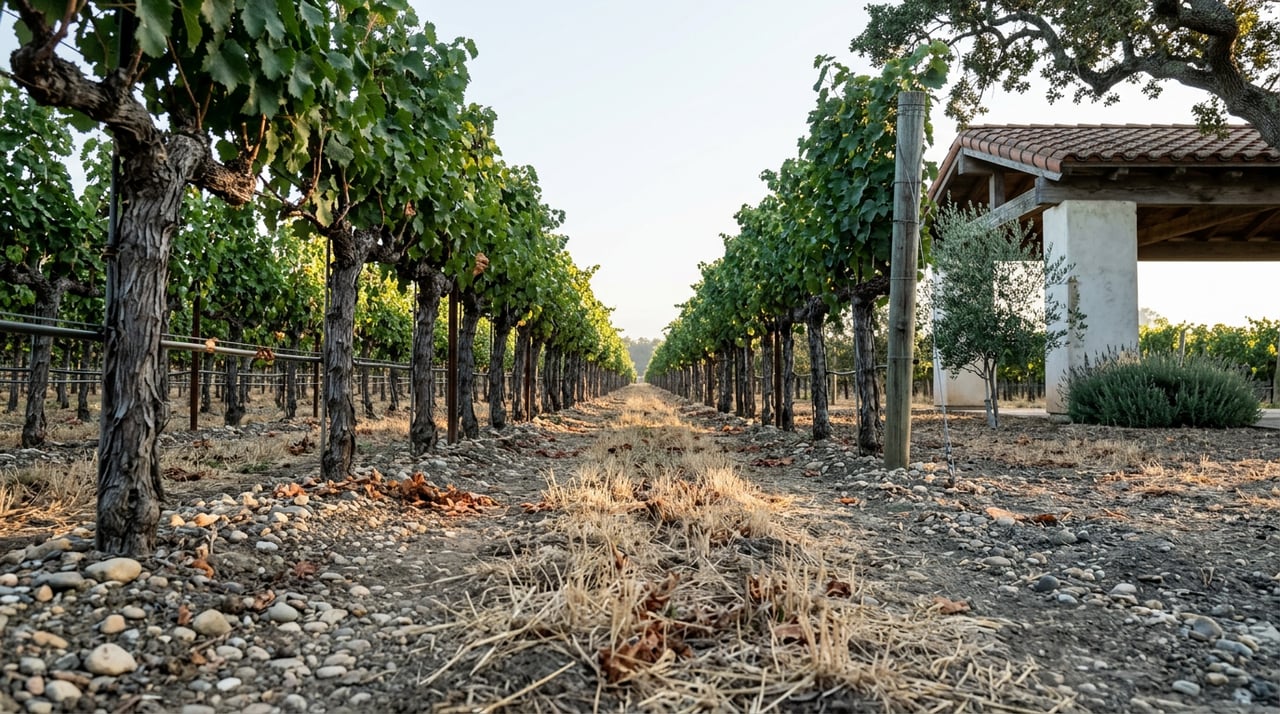
Healdsburg offers a different profile. In the same regional source, the Middle Reach below Healdsburg is described as one of the warmer neighborhoods in the valley, where Pinot Noir often breaks bud and ripens earlier. That makes Healdsburg less of a single-style Pinot story and more of a flexible vineyard and estate market.
On the Sebastopol side, the climate story is strongly marine-influenced. USDA-NRCS describes the Goldridge soil series as tied to mean annual temperatures around 55 to 56°F and annual precipitation around 40 to 45 inches. The same research base connects Sebastopol soils to cool, coastal-terrace conditions that support vineyard use.
For you as a buyer, that cooler setting can align well with a more classic cool-climate Pinot program. It may also point to tighter yield management and a more site-specific growing strategy, especially on hilly or wind-exposed parcels.
Healdsburg is still part of Sonoma County’s respected cool-climate wine landscape, but it is warmer in practical terms. NOAA normals for the Healdsburg station show an annual mean temperature of 60.2°F and annual precipitation of 42.81 inches, with summer monthly means in the low 70s.
That difference does not make Healdsburg unsuitable for Pinot. It does suggest a broader range of ripening conditions and, in many cases, more optionality if you want to support additional varietals or build a wider estate program over time.
Sebastopol has a strong reputation around Goldridge and Sebastopol soils. USDA-NRCS says Goldridge is a deep, moderately well-drained soil formed from weakly consolidated sandstone, while Sebastopol soils are deep, well-drained soils on old coastal terraces. These conditions are part of why the area is so closely tied to premium vineyard development.
From a practical standpoint, site engineering matters here. Rolling topography, drainage design, and erosion control can become central parts of your underwriting because the most compelling vineyard parcels are often naturally limiting in yield and shaped by slope.
Healdsburg is more mixed. The City of Healdsburg geology and soils materials describe valley-bottom Pleasanton, Yolo, and Haire loams and sandy loams, with upland Las Gatos, Speckles, Dibble, and Boomer clays and clay loams, plus older alluvial terraces in central Healdsburg and along the Russian River.
For you, that diversity can be a major advantage if you want to match clone, rootstock, and exposure more precisely to a site. It also means Healdsburg usually reads less like one neat terroir shorthand and more like a broader toolkit of valley-floor, terrace, and upland options.
The Russian River Valley Winegrowers fact sheet notes that the AVA is known for cool-climate varietals, especially Pinot Noir and Chardonnay. Their neighborhoods paper adds that Sebastopol Hills is planted almost exclusively to Pinot Noir, while Green Valley includes Sebastopol and is federally recognized as an AVA.
If you want an acquisition that immediately communicates cool-climate Pinot credibility, Sebastopol often gives you a cleaner message. For branding, pricing, and vineyard-designate storytelling, that clarity can be valuable.
Healdsburg sits near several wine identities rather than one dominant label. The Alexander Valley Winegrowers describe Alexander Valley as north of Healdsburg, stretching 25 miles with diverse ancient soils, valley-floor and mountain sites, and a mix of family-run wineries and tasting rooms. The broader Healdsburg orbit also connects to the warmer Middle Reach area of Russian River Valley and the premium reputation of Dry Creek Valley through the same regional research.
That can make Healdsburg appealing if you are not looking for a Pinot-only play. If your vision includes mixed varietals, a layered brand ladder, or a hospitality-forward estate concept, Healdsburg may give you more room to design around multiple strengths.
Before you focus too heavily on romance or branding, it helps to look at land-use basics. Permit Sonoma’s agricultural preserve guidance states that an agricultural preserve is at least 100 acres, and its FAQ notes that a Type I Williamson Act contract for vineyard or orchard land requires a 10-acre minimum parcel size. Farmland security zone rules also carry acreage and parcel-size thresholds.
Those details matter if you are underwriting a long-term agricultural hold, evaluating tax-related structure, or assembling a larger operational footprint. They can affect not just land use, but also how you model the property’s strategic value.
If you are considering modest direct-to-consumer or processing uses, Sonoma County has small-lot thresholds worth checking early. According to Permit Sonoma’s small-scale farm retail guidance, small-scale farm retail sales facilities can be allowed on parcels of two or more acres in certain zoning districts, and small-scale agricultural processing can be allowed at 3,000 square feet on 2 acres or 5,000 square feet on 5 acres.
This does not replace property-specific review, but it does give you a useful screening tool. For many buyers, these thresholds help separate a pure land play from a parcel that may support a broader estate program.
Water is site-specific in both markets, but the diligence lens can differ. Sonoma County parks identifies the Laguna de Santa Rosa as the primary drainage of the Santa Rosa Plain and a major floodwater storage basin for the lower Russian River, and the research report notes that Sebastopol-area parcels often involve drainage, floodplain, and groundwater questions.
For you, that means hydrology should be part of the acquisition conversation from the start. It is especially relevant when you are comparing sites that may look similar in photos but behave very differently in wet seasons.
The California Department of Water Resources describes the Healdsburg Area subbasin as part of the Santa Rosa Valley Groundwater Basin, with the Russian River floodplain and alluvium as the principal water-bearing setting. That does not make one parcel better than another, but it does show why groundwater setting, well capacity, and floodplain review should be part of your diligence stack.
In either market, water review is best treated as a first-pass filter, not a late-stage detail. It can influence vineyard performance, future improvements, and financing conversations.
If you are looking for a focused Pinot Noir vineyard with strong cool-climate credentials, Sebastopol is often the cleaner fit. The climate is cooler, the Pinot identity is stronger, and the terroir story is more concentrated.
If you want a more versatile estate canvas, Healdsburg often stands out. The climate and soils are more varied, the branding options are broader, and the setting may better support a multi-part estate vision that extends beyond one varietal.
The right answer depends on what you want the asset to do for you. If your priority is singularity, Sebastopol may feel more precise. If your priority is flexibility, Healdsburg may give you more strategic room.
When you are evaluating vineyard land at this level, details matter. Working with an advisor who understands climate nuance, site diligence, regulatory thresholds, and estate positioning can help you move with more confidence. If you are considering a Sonoma County vineyard acquisition, Wine Country Consultants can help you evaluate opportunities with discretion, technical insight, and a stewardship-driven approach.

We are a family real estate firm focused on legacy vineyards and wineries. Our unique approach to buying and selling properties highlights a deep understanding of the historical importance every property holds as well as its potential in today’s market. Contact us today to find out how we can be of assistance to you!