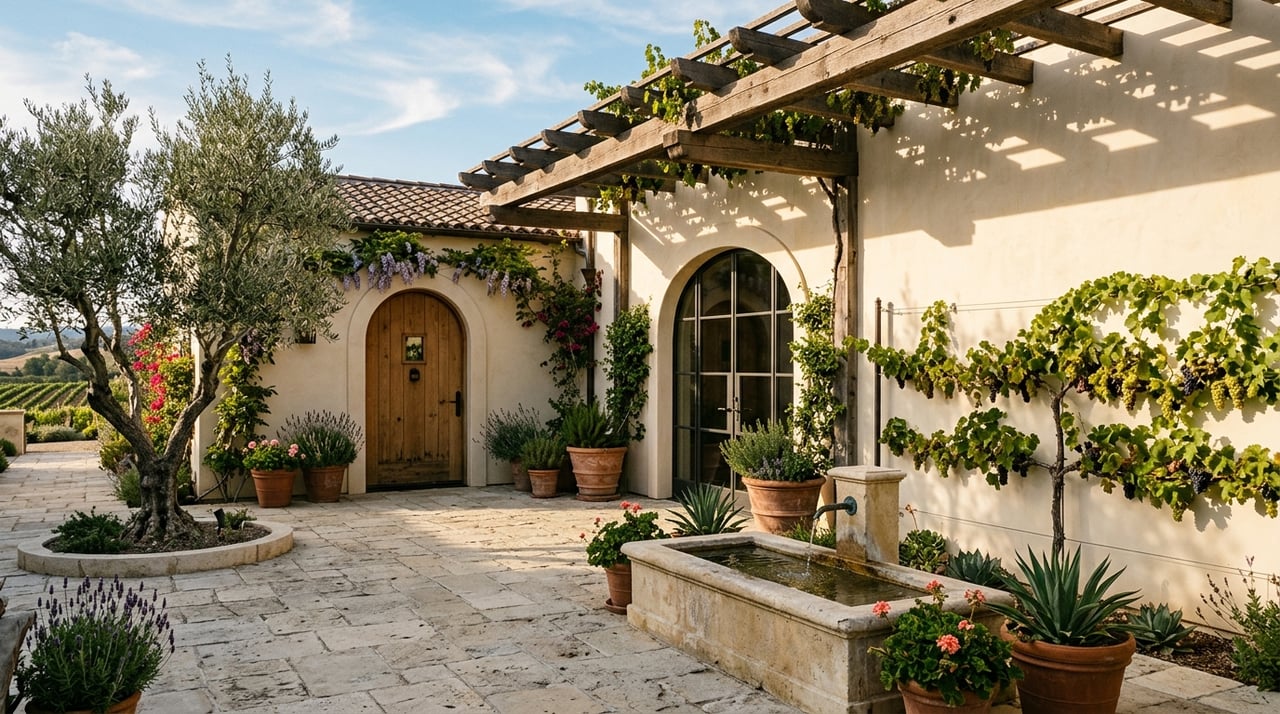
Oakville Cabernet Estate Values and Pricing Drivers
May 7, 2026
May 7, 2026
If you look at two Oakville Cabernet estates and wonder why one commands a very different price than the other, you are asking the right question. In Oakville, value is shaped by more than acreage or a prestigious address. You need to understand how appellation strength, physical site traits, vineyard lifecycle, and winery entitlements work together. Let’s dive in.
Oakville’s name carries real weight in the market. It is an officially recognized American Viticultural Area, or AVA, established in 1993, and it sits in the heart of Napa Valley between Yountville and Rutherford. Napa Valley Vintners describes Oakville as a warm valley-floor sub-appellation with historic vineyards, including To Kalon, along with the UC Davis research vineyard at Oakville Station.
That matters because appellation identity is not just branding. Research on California vineyard sales shows that designated appellations consistently affect value, and wine-pricing research shows that price premiums can grow when a wine also has sub-AVA or single-vineyard status. For an Oakville Cabernet estate, the AVA name, vineyard identity, and producer reputation can all support the asset’s economic value.
Oakville Winegrowers adds another important layer of context. The district is a roughly two-mile-wide stretch with more than 70 growers and wineries. That concentration of recognized vineyard and winery activity helps reinforce Oakville’s reputation as a serious Cabernet address.
Oakville is not one uniform growing area. The district has a moderately warm, transitional climate shaped by Bay fog, afternoon sun, and cooling breezes. Oakville Winegrowers notes that it is generally cooler than Rutherford and warmer than Yountville.
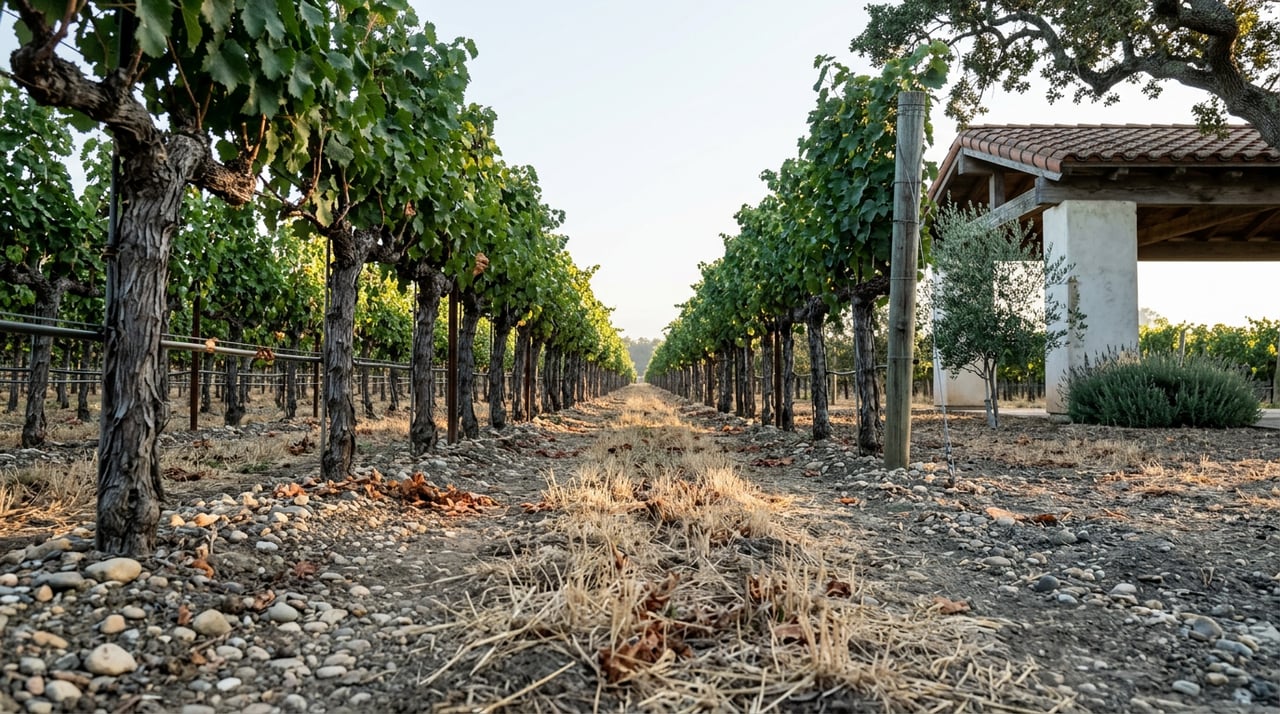
Soils also vary across the AVA. Napa Valley Vintners says the west side is mainly sedimentary gravelly alluvial loams, the east side has heavier volcanic soils, and the valley center contains deeper loam-based soils with average water retention. Those differences influence drainage, vigor, ripening, and vineyard performance.
That is why location within Oakville matters so much. A bench parcel and a valley-floor parcel may both carry the Oakville name, but they can offer very different combinations of slope, exposure, drainage, and soil profile. In practical terms, that can lead to meaningful differences in fruit quality, farming strategy, and long-term value.
It is tempting to rank one setting above another, but Oakville is more nuanced than that. The better way to think about bench and valley-floor land is as different physical packages with distinct strengths and tradeoffs. Vineyard-sale research points to recurring value drivers such as slope, aspect, elevation, and climate, and Oakville’s documented soil and climate variation supports that framework.
The Oakville AVA boundary history also shows how closely geography matters here. The federal rule establishing Oakville records debate around the southern boundary near the elevation and hydrologic divide west of the Yountville Hills and Rector Creek. That detail underscores a simple point: parcels that look close on a map can still behave differently in the vineyard.
Cabernet vineyards are long-duration assets, but they are not permanent. A UC Davis cost study shows that a new vineyard may begin yielding harvestable fruit in the third leaf and can remain productive for about 22 additional years. Over time, vineyard age becomes a key part of value analysis.
A mature block with a strong production history may support a premium. Buyers often value proven performance, especially in a market where site history and farming outcomes matter. At the same time, an older vineyard that is nearing redevelopment can reduce value if a buyer must absorb replant costs, production downtime, and uncertainty during the reset.
Napa Valley Grapegrowers notes that replanting is a major investment that typically brings at least two years of lost revenue. Replanting also has lasting effects on fruit quality, vineyard design, and longevity. For Oakville estates, that means the age of the vines is only one part of the story. The more important question is where the block sits in its lifecycle.
When a vineyard does need redevelopment, the technical choices are not minor details. UC ANR emphasizes the value of clean propagating material, local rootstock advice, and careful planning when replanting in infested soils. UC IPM also notes that even young resistant rootstock vines may still be stunted if replanting occurs in heavily infested soils.
For a premium Oakville Cabernet estate, those choices can shape future quality and cash flow. Soil testing, disease history, and rootstock planning can all influence whether the next planting preserves the estate’s top-tier potential. In other words, agronomic risk and redevelopment planning should be part of any serious valuation discussion.
If an Oakville property includes winery operations or future winery potential, entitlements can have a major effect on value. Napa County zoning rules make a clear distinction between agricultural land and a site with approved winery use. That difference can be substantial in both function and price.
Napa County defines a small winery as an existing winery with a maximum annual production capacity of 20,000 gallons and no public tours, tastings, wine-related retail, or public social events. For newer wineries, annual production capacity is set by the use permit. The county also requires at least 75% of grapes used for those wineries to be grown in Napa County.
Those rules mean permitted production capacity is a real asset. A property with established winery approvals, a workable building envelope, and allowed operational uses may be worth more than a similar parcel limited to agricultural use. The reason is simple: county regulations shape what can legally and physically happen on the site.
Napa County rules affect more than production volume. The county caps accessory winery-related structures at 40% of the production-facility area and requires a 600-foot setback from the centerline of state highways, Silverado Trail, or arterial county roads for wineries in open-space areas. These details can influence layout, expansion options, and the practical utility of a property.
For estates with a hospitality component, access patterns can support value as well. Yountville’s official chamber describes the town as the heart of Napa Valley and notes its location nine miles north of Napa off Highway 29, the valley’s main north-south route. Oakville’s historical boundary discussion also references Highway 29, Yount Mill Road, and Rector Creek, which helps explain why corridor proximity can matter for estates tied to visitor flow and brand exposure.
Countywide data helps explain why Oakville Cabernet estates attract such close attention. Napa County’s 2023 crop report shows total winegrape value of $1.204 billion, an average winegrape price of $7,051 per ton, and an average price of $9,235 per ton for Napa County Cabernet Sauvignon. Those are not Oakville-only numbers, but they provide useful market context.
The range within Napa Cabernet is even more revealing. Research cited in the Journal of Wine Economics notes that weather and climate can materially affect quality and price in ultra-premium wine, and the same work points out that 2023 Napa County Cabernet Sauvignon lots ranged from $200 to $67,200 per ton. That spread shows how sharply value can separate based on site, quality, and vintage conditions.
For Oakville, this supports a key underwriting principle. Not all Cabernet acreage should be valued the same way, even within a blue-chip AVA. Quality signals and operating factors can create very wide outcomes.
When you assess what drives value in an Oakville Cabernet estate, it helps to use a simple three-part framework: terroir quality, entitlement quality, and brand quality. Looking at only one of those categories can lead to an incomplete picture.
Terroir quality includes the physical conditions of the site. That means soil profile, drainage, slope, exposure, climate position, and whether the vineyard sits on the bench or valley floor. It also includes block maturity and the condition of the planting.
Entitlement quality covers what the county allows the property to do. If a site has approved production capacity, a favorable building envelope, or operational permissions already in place, those factors can materially strengthen value. If those approvals are absent or constrained, the property may trade differently.
Brand quality reflects the market power of Oakville itself, plus any estate-specific reputation tied to vineyard name, label history, or producer standing. In premium Napa markets, those signals can magnify value in ways that acreage-only comparisons miss.
Compared with other top Napa districts, Oakville tends to offer a rare combination of place prestige and operational flexibility. It is centrally located, strongly associated with Cabernet, and supported by recognized vineyard and winery infrastructure. That combination helps explain why many Oakville estates are viewed as long-term operating assets rather than simple farmland.
For buyers, this means disciplined analysis matters. You are not just buying dirt, vines, or buildings. You are evaluating a layered asset where land characteristics, regulatory realities, and market identity all reinforce each other.
For sellers and families considering a transition, that same complexity creates opportunity. A well-positioned Oakville Cabernet estate may deserve a valuation story that goes beyond comps and acreage. It may require a more detailed understanding of legacy value, operational rights, and long-term stewardship.
If you are weighing an acquisition, a sale, or a succession decision in Oakville, careful property-level analysis can make a meaningful difference. Wine Country Consultants brings a measured, local, and highly specialized approach to legacy vineyards, winery estates, and complex Napa Valley agricultural assets.


We are a family real estate firm focused on legacy vineyards and wineries. Our unique approach to buying and selling properties highlights a deep understanding of the historical importance every property holds as well as its potential in today’s market. Contact us today to find out how we can be of assistance to you!